REPUBLIC OF SOMALILAND MINISTRY OF LIVESTOCK

PREFACE

The main purpose of this Act is to guide and streamline hygienic practices in primary production, handling, processing and distributing of milk and milk products. It will protect the consumer from potential health hazards caused by transmission of pathogenic agents from animals, through contaminated milk and pathogens through dilution of milk and addition of other substances.

The Act outlines the production of milk from healthy animals, milked by clean and healthy personnel, handled, processed and distributed in a hygienic manner to protect the consumer. The code also requires that all those involved their agents and/or premises of production or handling of milk for sale be registered to facilitate traceability of the product, vehicle, agent, for ease of enforcement of the relevant milk and milk products standards.

JUSTIFICATION

Somaliland is a country that broke away from the rest of Somalia in 1991 following the collapse of the former regime of Somalia. Since then, the public sector has been straggling with the restoration of the regulatory framework of the country to eliminate the gaps that existed since the collapse. There have been no laws on milk and milk by- products, guidelines to cover the existing needs on sanitary and phytosanitary measures and the public health protection has been in a precarious situation.

Hence, the Ministry of Livestock has come to realize that it is the right time to put in place the Dairy Act which is expected to cover the dairy needs on public health protection.

The Dairy Act has been developed to address constraints in the milk value chain in compliance with local, regional and international obligations in matters related to animal health. The Dairy Act proposed to take the following into consideration:

  • National Veterinary Code and other laws of Somaliland
    • OIE terrestrial animal health code.
    • AU/IBAR recommendations for disease control policies and strategies for East African countries.
    • WTO/SPS requirements/agreements in livestock and agricultural products trade.
    • FAO/IAEA r e c o m m e n d a t i o n s  on  a c c r e d i t a t i o n  f o r t h e p u r p o s e of s a n i t a r y measures of inspection and certification  protocols  and  procedures  of implementation for   the export and import of livestock and livestock products.
    • The Joint Needs Assessment (WB/UN/GOSL/JNA) (2006) report. The report has described the livestock sector development needs (not all the priorities were emphasised in the report) towards attainment of the Millennium Development Goals (MDG) by the year 2015.
      • Food and water security strategy
      • National development plan (2012-2016)

ADMINISTRATION OF THE ACT

The Minister shall be responsible for the implementation and enforcement of this Act and all regulations made there under and shall in that capacity perform all functions and exercise all powers conferred upon him by this Act.

1.       SCOPE

This code prescribes the minimum standards and requirements for hygienic practice for production, handling and commercial distribution of both locally produced and imported milk and milk products.

2.       APPLICATION

  • The code shall apply to raw, processed milk, and milk products consumed in Somaliland.

3.       DEFINITIONS

For the purposes of these standards the following definitions shall apply:

Milk product—A product obtained from milk with addition of food additives, processing aids and other ingredients functionally necessary for the manufacturing process.

Pasteurization—shall be the heat treatment at specific temperature time combination aimed at reducing the number of harmful micro-organisms in milk and cream. It is intended to result in extended shelf-life of milk and in only minimal chemical, physical and organoleptic changes. Pasteurization conditions are designed to effectively destroy the organisms of mycobacterium tuberculosis and other harmful pathogenics. Pasteurization of milk and cream results in a negative phosphates activity and positive peroxide activity

Public Health Protection P—shall be the control and measuring levels of potential hazards to protect the consumer from any ill-health caused by contaminated milk and milk products.

Raw milk— .shall be normal ,clean and fresh mammary gland secretion of healthy milking animals, free from colostrums, without addition to or extraction from it, and is suitable for further processing

Thermization—shall be a heat treatment at specified temperature and time combination aimed at reducing the number of organisms in milk and permitting longer storage of milk prior to further processing. The heating conditions are 62° C, to 65° C for 15 to 20 seconds. Thermized milk must be phosphates positive.

Board: means the Somaliland Dairy Board established under section 4.

Butterfat: means the natural and complete fat which is present in milk.

Consumer: means a person who buys dairy productt for his own use and not for resale;

Dairy produce: means milk, cream, butter, ghee, cheese and any other product or by-product of milk;

“Director” means the person who for the time being is performing the functions of Director of Veterinary Services.

Distributor: means a person who buys dairy produce for the purpose of resale;

Ghee: means purified butterfat containing no preservative or coloring matter and with no fats or oils added to it;

“License  ”  Means permit,  certificate  or  any  other  written  authorization the possession  of which is prerequisite to engaging in any activity or the operating of any structure or facility under the Act;

Milk: means a white liquid produced by the mammary glands of cow, goat, camel or sheep; Non-scheduled Areas: means all areas of land in Somaliland not for the time being comprised in the Scheduled Areas;

Package: includes cask keg, crate, can, box, case, wrapper, tin bottle, carton and every other receptacle or covering used for the packing of dairy produce;

Person – is any person engaged in production, processing, packaging, conveying, storing or displaying milk and milk products.

Premises – An area designated by the municipality for the retailing of milk

Producer: means a person who produces, processes, manufactures, prepares or treats dairy produce for sale;

Registered producer: means a person registered under Part V;

Retailer: means a person who sells dairy produce directly to consumers or a person who purchases dairy produce from a distributor for resale to consumers;

Scheduled Areas: means the areas of land specified in the Schedule;

Sell: includes offer, advertise, keep expose, transmit, convey, deliver, or prepare for sale and any exchange or disposal for consideration.

4.   PRIMARY PRODUCTION

4.1   Environmental hygiene

  • Water: Water used in primary production operations should be suitable for its intended purpose and should not contribute to the introduction of hazards in milk.
    • Where possible adequate and clean potable water shall be supplied at the production and processing sites to facilitate all hygienic practices of milk.
    • Well or boreholes shall be carefully located and constructed to prevent the seepage of surface water into the supply.
    • Precautions should be adopted to ensure that milking animals do not consume contaminated water or feed likely to cause disease or contaminate milk.

4.2   Waste

  • Wastes shall be disposed of in such a manner as to render them inaccessible to reduce fly population and prevent abnormal odors in milk.
    • Measures shall include: –
  1. Milking shall be done far away from manure or other wastes so as not to contaminate the milk.
  2. Waste water or other effluents shall be disposed of in such a manner as to reduce its accumulation in the milking area
  • Dust in the immediate surroundings of milk production shall be controlled not to contaminate the milk.

4.3   Hygienic production of raw milk

This section gives guidance for the hygienic production of raw milk covered by this code.

  • Animal health

The raw milk should originate from animals:

  1. Which are free from brucellosis, tuberculosis, mastitis or any other zoonotic diseases that can affect human health.
    1. Which do not show any clinical evidence of infectious diseases.
    1. Which do not show visible impairment of the general state of health.
    1. Which are identifiable by appropriate method to facilitate effective herd management practices
    1. Milking areas and related facilities shall as much as possible accommodate the milking animals.
  • Premises/sites where milking is performed shall be sited and/or constructed in such a way as to minimize the risk of environmental contamination of the milk. They should be far from commercial environment:
  1. Made in such a way as to facilitate draining of liquids and adequate means of disposing of waste:
    1. Supplied with an appropriate and adequate supply of potable water for use in milking and in cleaning the equipment and the instruments for milking:
      1. Effectively separated from all sources of contamination such as lavatories and manure heaps.
      1. Milking sites should be changed frequently especially during the rainy season

4.4   General hygienic practice for commercial environment

  • Feeding

Forage, feed and fodder for the milk animals shall be safe and suitable and shall not present a risk of transferring, pathogens, residues of pesticides, toxins or any other agents used in the production of feedstuffs to the milk in amounts that presents a health risk to the consumer directly or indirectly.

  • Vermin
  1. Vermin shall, where applicable, be effectively controlled to avoid any microbial contamination of milk.
  • Vermin control shall be in such a way that it shall not result in pesticide residues in milk.
  • Hygiene of feed stuff and use of veterinary drugs

Milk from animals which have been treated with antibiotics or other veterinary drugs which can be transferred to the milk shall not be used unless the withdrawal period specified for the drug in question following such treatment has been achieved.

  • No person whether an animal producer or dealer for sale shall feed his animal on feedstuffs that―
    • Are  recognized  as   or   are   likely   to   introduce   zoonotic   agents   such   as,   but not limited to, Transmissible Spongiform Encephalopathies.  (TSEs)  to  milking  animals;
  • contain chemical substances such as, but not limited to, and pesticides, or contaminants that could result in residues in milk at levels that make the milk thereof unsafe for human consumption; or
    • Are based on traditional or customary practice if they are, to the best of his knowledge, likely to be harmful to any person who may take the milk of that animal or products made from that milk.
  • For its part the Government through the Minister shall be obligated to―
    • Control  the  registration  and   use   of   veterinary  drugs, pesticides and feedstuffs so that residues do not occur in milk at unsafe levels that make the milk or its products unsafe for human consumption;
    • Provide and enforce monitoring and surveillance systems that establish baseline  data as to levels of harmful residue;

4.5   Hygienic milking practice

Hygienic milking – milking shall be carried out under hygienic conditions, including:

  1. good personnel hygiene and health
  2. Clean udder, teats, groins, thighs and abdomens of the animals.
  3. clean and disinfected milking equipment
  4. avoidance of any damage to the tissue of the udder
  • Prior to milking, the milk from each teat shall be checked for visible defects. If the milk is abnormal ‘the milk shall not be used. Animals showing clinical symptoms of diseases shall be segregated and/or milked last, or milked by using separate milking equipment, and such milk shall not be used for human consumption.
    • The producer should take appropriate precautions to minimize the risk of infections to teats and udders.

4.6   Cleaning and disinfecting of milking equipment

Milking equipment shall be cleaned and disinfected using appropriate agents after each milking and remain fully drained between uses.

a) Personal hygiene practices during milking

Milking shall not be performed nor shall milk be handled by persons who have diarrhea, coughs, TB or who are vomiting or sneezing. Such a person shall not take part in the milking until all risks are over.

  • Both hands (up to elbow) shall be washed frequently with detergents always before initiating milking or handling of raw milk.
  • Suitable clothing shall be worn during milking and shall be clean.
  • Milking personnel shall avoid smoking, spitting, chewing or eating, or any other undesirable behavior during milking.

4.7   Handling, storage and transport of milk.

  • Hand milking and storage equipment

(i)          Milking containers shall be made up of cleanable materials preferably stainless steel or aluminum; plastic containers shall not be used.

  • Milk handling
  • Immediately after milking, the milk shall be stored in a clean place which is so maintained to avoid adverse effects on the milk.
  • Milk shall be delivered as soon as possible in stainless steel cans
  • Milk shall be kept as cool as possible all the time
    • Milk collection
  • All milk transported in cans shall be protected from contamination:
  • Lids shall be firmly placed as soon as milk cans are filled
  • The lids shall remain in position until the milk is received at the processing plant, cooling centre or distribution point.
  • Cans picked up by lorries shall be placed in such a manner by the farmer to avoid any risk of contamination by mud, manure silage, etc.

The cans shall be protected from direct sunlight e.g. by use of shelters.

4.8   Handling of Milk at Collection Centers

  • Collection centers shall be located nearby roads, water and electricity supply, and with efficient drainage system.
  • Milk shall be delivered to the centre as soon as possible and kept as cool as possible.
    • The control of incoming milk shall include the following minimum simple tests for acceptance:
  • Organoleptic (olfactory and visual)
  • Density (lactometer reading)
  • PH using universal indicator paper
  • Or any other possible physical milk inspection techniques.

In addition to the minimum tests for acceptance the following may verify the acceptability of milk:

(i)           Determination of preservatives and antibiotics.

  • Milk shall be weighed, filtered
    • At collecting centers, cold storage facilities shall be provided where milk is not transported or collected twice a day to ensure a temperature of not more than preferably 10° C.
    • Hot water at a temperature of 60° C shall be available.
    • Collecting centers shall provide a drainage or sewage system and surrounding area shall be maintained in a clean sanitary condition.
    • Suitable equipment shall be provided at the centre for cleaning of cans before returning to the milk producer (farmers)
    • The supervisor of the centre shall have a certificate in Dairy Technology and approval from the Vet-board to effectively handle milk reception and routine hygienic procedures.
    • It is preferred that milk transport tankers and cans be used to transport milk only, however they may be used to transport other foods if suitable precautions are taken to prevent any subsequent milk contaminations.

4..9 Transport time temperature ( Temperature during transportation)

After cooling at collection centers, milk shall be transported under insulated condition to reach a temperature of preferably not more than n 10° C

(i) It shall be transported in vehicles protected from direct sunlight and the journey shall preferably not take more than 3 hours where insulation is not available.

4.10 : personal hygiene at the establishment

Personal hygiene- the establishment management shall ensure that every employee shall meet the following requirements.

  • Shall be examined and certified medically fit to work in a food industry as elaborated by the public health rules prior to employment and examined thereafter every 6 months and a health record maintained.
  • Shall be supplied with protective clothing which is maintained in a clean condition.
  • Shall have procedures or maintain an atmosphere motivating employees to report any occurrence of sickness or infectious diseases such as diarrhea, vomiting, fever, jaundice, skin lesions, discharges and sore throat.

5.0 MILK MARKETING PRACTICES

51 Transportation – Milk should be collected, transported and delivered without undue delay, and in a manner that avoids the introduction of contaminants into milk and minimizes the growth of microorganisms in the milk.

5.2          Cooling in distribution

  • It is recommended that raw milk is cooled to reach the consumer at a temperature of not more than 10° C
    • Refrigeration, or cooling facilities such as ice shall be provided for long distant distribution and the ice shall be made from potable water
    • Milk and milk products shall not be exposed to direct sunlight

5.3          Retailing of milk

  • Retailing of milk shall be done in licensed designated premises.
  • Vendors shall keep milk for sale as cool as possible preferably by use of ice or refrigeration
  • All containers used for milk retailing shall be made of stainless steel.
  • Scooping ladles shall be made of stainless steel or aluminum and be duly calibrated
  • Proprietors of the premises (municipalities) shall keep them under shade and in sanitary conditions complying with the requirements of public health rules and regulations where available.
  • The municipalities shall be so equipped as to carry out simple milk quality tests to detect adulteration and freshness of milk at designated premises.

5.4   The municipalities will enforce all aspects of the marketing practices

  • . Registration to engage in production and marketing of dairy products
  • On application by any person, the Director General or his designee may, in accordance with regulations made under this Act, register that person to undertake the following:

(a) Dealing in milk production, processing and marketing and dairy products

  • The Minister may refuse to register an applicant under subsection (1) if the application does not meet the requirements prescribed and revoke or suspend a registration where the registered person fails to comply with the terms and conditions of the registration; and the revocation or suspension shall be in addition to any other penalty to which the registered person may be liable under this Act.
  • A person shall not be refused forregistration solely by reason that he or she has not previously been engaged in any of the activities prescribed in this act.
  • A person aggrieved by a refusal for registration or revocation or suspension of his or her

registration may appeal to the board against the decision.

  • A registration certificate issued under this section shall be valid for one year and shall be renewable on payment of the prescribed fee.
  • The Board may, on the recommendation of the technical persons in the concerned department, by statutory instrument, prescribe the terms and conditions for registration, including:
  • The form and method of application for registration under this section.
  • The fee is payable on the issuance of the registration certificate.
  • Every holder of a registration certificate shall forward to the authority all the information that the authority shall prescribe.

5.6   Regulations for registration, Ceases and licenses

(1)     The Minister may, after consultation with the Technical Persons in the concerned department, make regulations

  • For the registration of producers for the purposes of above section;
  • For the payment and collection of access imposed under section 6;
  • For the granting of licenses to producers or processors and the qualifications for the granting of the licenses;
  • prohibiting any producer or processor from engaging in the production, supplying, cooling, processing, manufacturing, distribution or sale of milk or dairy products in any case where his or her licence has been suspended or revoked;
  • Prescribing t h e manner of producing, cooling, supplying, processing, manufacturing, transporting and storing of milk or dairy products;
  • Restricting by means of quotas or any other means the quantities of milk or dairy products which may be sold or disposed of by any person;
  • Prescribing fees or charges for services rendered under this Act by the authority or its officers or agents;
  • providing for the licensing of premises where milk or dairy products are  produced for sale and where milk is cooled, processed, manufactured, stored or from which it is distributed; and

(l) Providing for the appointment of an arbitrator to whom disputes may be referred by any person who is aggrieved by any wrongful act or omission of the authority.

6.0   RECORDS

Records shall be kept and maintained on the following:

6.1   Collection centre and processing plants

  • Registration book and cards for farmers.
    • Suppliers records indicating quality and quantity of milk
    • Approval license from relevant authorities and inspection certificate by public Health Department for handling of milk and its products..
    • Medical examination records of personnel.
    • Relevant equipment and calibration records.
    • Cleaning schedules.
    • HACCP protocols
      • Qualifications of the technical personnel in the plant
      • Traceability Records for animal health
      • Emergency preparedness procedures

7  TRAININGS

  • All milk collecting centers in conjunction with the ministry responsible for livestock shall organize milk hygiene trainings
    • All personnel handling milk and milk products shall be trained in principles of food hygiene.
    • All personnel in charge of milk collecting and distribution centers shall be qualified with a certificate in Dairy Technology
    • Consumer awareness campaigns shall be carried out to educate consumers to all sanitary measures including boiling of raw milk before use.
    • All training outlines shall be approved by the ministry.

Part II – Establishment and Administration of the Somaliland Dairy Board

1.   Establishment of the Board.

There is hereby established and nominated board by the Minister of Livestock to be recognized as the Somaliland Dairy Board, which shall be a body corporate with perpetual succession and a common seal with power to sue and be sued and to purchase, hold, manage and dispose of land and other property, and to enter into such contracts as it may consider necessary or expedient..

2.   Membership of the Board.

  1. Director of Animal Production Department in Ministry of livestock.
    1. Director of Public Health Department in Ministry of Health.
    1. Director of environmental sanitation and food safety in Municipalities.
    1. Director Quality Control Commission
    1. Dairy producers’ representatives.
    1. District Based dairy Associations Representative
    1. Distributors and processers of milk and milk products representatives.

The members shall elect the Chairperson and Vice-Chairperson and Secretary of the Board from among them

3.   Duration of office of members of the Board.

  1. The members of the Board shall be elected for a time span of three years.
    1. Two members of the Board shall retire every three years in rotation; except Director of Animal production department in the ministry of livestock, Director of Public Health Department in Ministry of Health And Director of environmental sanitation and food safety in Municipalities.
    1. A member of the Board shall cease to hold office –
  1. if he delivers to the Chairman of the Board a written resignation of his office;
  2. if he is adjudged to be of low moral integrity or suffers from pecuniary embarrassment
  3. if the Board declares by resolution that he has been absent from three consecutive meetings of the Board without the permission of the Chair. ;
  4. if he undergoes any term of imprisonment on conviction for an offence;
  5. if the Board decides by simple majority to remove him from office on being satisfied that he is incapacitated by physical or mental illness or is otherwise unable or unfit to discharge the functions of a member or is unsuitable to continue as a member.

A member of the Board who retires or resigns shall be eligible for reappointment after three years of office bearers. .

5. If a member of the Board is, by reason of illness, absence or other cause, unable to perform the duties of his office, the Board may appoint by simple majority a person to be a temporary member of the Board for the period of the incapacity of the member; and any such temporary member shall have the powers and authority of a member of the Board during that period.

4.   Remuneration and expenses of members of the Board.

  1. The members of the Board shall serve unpaid. .
    1. The Board must pay travelling allowance and other expenses which may reasonably have been incurred by the members by reason of their office activities.

5.   Officers and staff.

The Board may employ an executive officer, a secretary and such other officers, servants and agents as may be necessary or desirable for the efficient conduct and operation of the Board.

6.   Presiding officer at meetings.

The chairperson, or in his absence the vice-chairperson, or in the absence of both a member elected by the Board, shall preside at all meetings of the Board, and the member presiding at a meeting shall with respect to that meeting or to any business transacted thereat have all the powers of the chairman of the Board under this Act.

7.   Decisions of the Board.

  • The member presiding at a meeting shall have a casting as well as a deliberative vote, and subject thereto the decision of the majority of the members present and voting at any meeting of the Board shall be deemed to be the decision of the Board.
    • The quorum of the Board shall be four, exclusive of the chairman or member presiding.
    • Subject to the provisions of subsection (2), no act, decision or proceeding of the Board shall be questioned on account of a vacancy in the membership thereof, or on account of the appointment of a member of the Board being defective.

8.   Common seal.

The common seal of the Board shall be authenticated by the signature of the chairman of the Board or of some other member authorized by the Board to act in that behalf, together with the signature of the executive officer to the Board and the secretary to the Board, or some other person authorized by the Board to act in that behalf, and the seal shall be officially and judicially noted.

9.   Execution

All documents other than those required by law to be under seal made by, and all decisions of, the Board may be signified under the hand of the chairman, the executive officer a, or of any member of the Board authorized in that behalf.

10.   Meetings of the Board

  1. The Board shall hold ordinary meetings as and when necessary, but not less than once in every three months.
    1. Ordinary meetings of the Board shall be convened by the chairman at such times and at such places as he may deem fit.
    1. The chairman, or in his absence the vice-chairman, shall convene a special meeting of the Board at any time upon receipt of a requisition signed by not less than four members calling upon him so to do, and the special meeting shall be held not later than twenty-one days after the receipt of the requisition.
    1. The minutes of all board meetings shall be taken and kept by the secretary and confirmed in the next meeting and thereafter signed by both the chairman and the secretary

11.   Board to regulate its own conduct

The Board may from time to time make standing orders providing for the regulation of its meetings, the conduct of its business and the duties of its officers and other employees.

Part III – Functions, Powers and Duties of the Board

  1. The functions of the Board shall be –
  2. Promote systematic and sustainable milk collection procedures.
  3. Encourage formation of associations of milk producers, traders, handlers, processors
  4. Promote the Improvement of the quality of milk and its products across the value chain
  5. Promote the use of hygienic milk containers
  6. Encourage use of appropriate milk transportation
  7. Promote and improve storage and marketing facilities in local markets in collaboration with local authorities
  8. Promote the set-up of milk quality control
  9. Promote private dairy enterprise
  10. Promote training and capacity building for the dairy sector
  11. Promote consumption of milk and it’s products
  12. Promote improvement of infrastructure
  13. Promote the code of hygienic practice for production, handling and distribution of milk and milk products and any other rules and regulations of the dairy sector
  • Formulate and promote a dairy development policy proposal to be submitted to the Minister
    • In the exercise of its powers and in the performance of its functions under this Act, the Board shall act in accordance with general or special directives that may be given to it by the Minister after consultations.
    • Management
      • All funds, assets and property, movable and immovable, of the Board shall be managed and utilized by the Board in accordance with the provisions of this Act and of any regulations made thereunder, in such manner and for such purposes as in the opinion of the Board shall promote the best interests of the dairy industry.
  • The expenses of the Board shall be met from the Board’s funds.

4.       Power to make regulations

  1. The Board may prescribe grades for any form of dairy produce, and minimum standards to which dairy produce shall conform under their authorization;
    1. prescribing the manner of handling, transporting and storing of dairy produce intended for the use of or consumption by any person other than the producer thereof;
    1. prescribing the areas within which retailers may sell dairy produce to consumers;
    1. requiring the registration and licensing, in such manner and upon payment of such fees as may be prescribed, of distributors of dairy produce;
    1. prescribing fees or charges for services rendered under this Act by the Board or its officers, servants or agents;
    1. prescribing the manner in which delegates to represent registered producers for the purposes of section 19 (annual regional meeting) may be selected;
    1. prescribing the forms of application, and of licenses, marks, registers and all other documents to be used for the purpose of this Act
    1. prescribing the manner of marking articles intended for use in connection with dairy produce, including wrappers or packages intended to contain dairy produce;
    1. prescribing the qualifications, powers and duties of inspectors and other persons appointed to exercise powers and perform duties under this Act;
    1. for the examination, inspection, analysis and testing of dairy produce or any article used in connection with dairy produce, prescribing charges in respect thereof, and the conditions upon and the manner in which samples of such produce may be taken in collaboration with the municipality hygiene Unit.
  • authorizing the opening by prescribed persons or officers, for the purpose of inspection, of any package which contains dairy or is reasonable through to contain dairy produce;
    • authorizing the examination and inspection by prescribed persons or officers of all books and documents relating to the production, manufacture, distribution or sale of any dairy produce;
    • making different provisions with respect to different cases or classes of case, different areas, seasons or circumstances, and for different purposes of this Act and may impose conditions and restrictions.

5.   General provisions with regard to regulations

Regulations made under this Act may provide for –

  1. Their application to any specified area, or class of persons, or type or description of dairy produce;
  2. 5.2 Empowering such authorities or persons as may be specified in the regulations to make orders or issue directions for any of the purposes for which regulations are authorized by this Act to be made;
  3. 5.3 The particulars, information, proof or evidence to be furnished as to any question or matter arising under this Act or regulations;
  4. 5.4 Imposing on any person accused of an offence under this Act or regulations the burden of proving particular facts, but not so as to impose on an accused person the general burden of proving his innocence.

6.   Regional and delegates meetings.

  • The regions will have board representativesThe Board representatives shall at least once in every year convene a meeting (hereinafter referred to as a regional meeting) of the registered producers in each region into which Somaliland may, for this purpose, be divided by the Board.
  • 6.1.2 The chairman of the Board, or in his absence a member of the Board appointed by the chairman, shall preside at every regional meeting.
  • 6.1.3 The Board representatives shall at least once in every year convene a meeting of delegates of registered producers for the purpose of considering the reports and accounts specified in section 24 (4).
  • 6.1.4 The Board shall give the Ministry of Livestock at least six weeks prior notification of the date upon which each annual meeting under subsection (3) is to be held.
  • 6.1.5 The Board may also convene other regional meetings or meetings of delegates of registered producers for such purposes and at such times as it thinks fit.
  • 6.1.6 The Board may from time to time make standing orders providing for the regulation of regional meetings and of meetings of delegates of registered producers.

7.   Notice of meetings.

  • Not less than twenty-one days before the day fixed for the holding of a regional meeting or a meeting of delegates of registered producers, the Board shall send to the Ministry of Livestock and to every registered producer in the region or to every delegate, as the case may be, a notice stating –
    • The time and place appointed for the holding of the meeting; and
    • The business to be transacted at the meeting; and if the business is to include consideration of the reports and accounts then those reports and accounts shall be sent with the notice.
  • 7.2 The Board shall include in the business to be transacted at a regional meeting or a meeting of delegates of registered producers any matter of which not less than ten registered producers in the region or a delegate of registered producers, as the case may be, have given notice in writing to the Board.
  • 7.3 No business shall be transacted at a regional meeting or meeting of delegates of registered producers other than the business of which notice has been given under subsection (1) by the Board:

Provided that the accidental omission to send a notice to a registered producer or a delegate, as the case may be, shall not invalidate proceedings of the meeting.

8Power of the Board to acquire and dispose of property.

1) 8.1 The Board may, out of its funds, purchase, take on lease, hire or otherwise acquire such land, buildings, plant, machinery and equipment as in the opinion of the Board are necessary for the performance of its functions.

8.2 The Board may sell, transfer, lease, hire, or otherwise dispose of any of its movable or immovable property.8.3 The Board may, if it has funds, provide for the erection of such depots, factories and stores as it thinks fit.

Part IV – Financial

  • Board may establish an account and special funds.
  • The Board may establish in its name a bank account for the exercise of its powers and functions under the provisions of this Act or of regulations made under this Act.
    • The account shall be operated on by cheque signed by two persons authorized in that behalf by the Board.

4.2   Books of account.

The Board shall cause to be kept proper books of and other books in relation thereto in respect of all accounts its undertakings, funds, activities and property, including yearly statements of income and expenditure and balance sheets made up to the end of each financial year showing in detail the assets and liabilities of the Board, and shall prepare such other accounts as the Ministry of Livestock may require.

4.3       Audit of accounts

  1. The Ministry of Livestock shall propose three independent audit companies from which the Board shall appoint one who shall annually examine, audit and report upon the accounts of the Board.
  2. The Board shall produce and lay before the auditors all books and accounts of the Board, with all vouchers in support thereof, and all books, papers and writings in its possession or control relating thereto, and the auditors may require from all members, officers, agents and employees of the Board such information and explanation as may be necessary for the performance of their duties as auditors.
  3. The expenses of the audit shall be paid by the Board, when requested..
  • The Executive Director shall within a period of three months after the end of its financial year submit an activity report and the auditor’s report, together with the yearly statement of income and expenditure, balance sheet and such other statements of accounts, to its members.

e.

Part V – Registration of producers, collectors (distributors), transporters, retailers Definition of the term

The definition of the terms as given in section 3 shall apply

Requirements to Register

1. Producers, collectors (distributors), transporters, and retailers shall register with the Board by supplying the full name and address, mainly the name of district and village;

Producers, collectors (distributors), transporters, and retailers who are registered in accordance with this section shall notify the Board of any change in address.

Minister’s power to amend Schedules

The Minister may, after consultation with the board and technical persons in the concerned department, amend or change contents of this Act.

Part VI. General Offences by companies

  • Where a person in breach of any provision of this Act or of any regulations made under this Act shall be reported to the legal system.

6.2  Appeals

A person aggrieved by a decision of the Board or of an agent of the Board may, within one month after being notified of that decision, appeal to the minister of livestock, if is not satisfied here by the decision of the minister, to the person has the right to proceed to the high court and, save as aforesaid, the provisions of that Part shall, mutatis mutandis, apply in relation to every such appeal.

6.3  Act additional to public health laws.

The provisions of this Act and of any regulations made thereunder shall be in addition to and not in derogation of the provisions of any written law relating to public health for the time being in force.

Part VII. Violations

  • PenaltiesAll violations with known penalties or committing an act which is prohibitive according to this act, or those penalties which are not prescribed by this act will be handled according to Somaliland penal code.Penalties without known or definite rate or not prescribed according to this act will be issued through ministerial decree (regulations) as the need arises and will be publicized through the national gazette.

7.2   Regulations

  • The Minister of Livestock will issue regulations as the need arises stating /prescribing all penalties and orders needed according to this act to be in line with the changing situations.
  • Regulations will interpret, prescribe and facilitate the articles of this Act, hence any contradiction to the articles of this act and regulations are prohibitive.

7.2   Power of inspections and holding

  • The Ministry of Livestock has the responsibilities and the authority to inspect and send anybody who violates this act to the judiciary system and that person will be immediately brought in front of the court.

7.3   Article 36 penalties and fining

  1. Anybody who intentionally violates the articles of this act with three previous warnings ,whose violations causes no loss with known penalties, will be arrested between 15 days up to one year, or fine that is between 200,000 (two hundred thousand Sl Sh) ShSL up to 10,000,000 million ShSL (ten million SL Sh) according to the level of violations committed.
  2. Loss with known or definite level that is due to violations committed against this Act will be handled according to the Somaliland Penal Code.

7.4     Withdrawal from the license

  1. Anybody who intentionally habitualises to violate the articles of this act and at the same time fails to refrain from doing so, after it becomes clear that he /she has committed this violations intentionally, the Ministry will suspend/withdraw his /her license or registration. The minister will assign a committee to inspect that violations if that is needed.

7.5     Appeal

A. A person aggrieved by a decision of the court has the right to take appeall and will ask appeal from the court.

Part VIII Enforcement

. Annulations

Any act, regulation, Ministerial decree or orders contrary to this act is cancelled or adjusted to the meaning of this act.

Enforcements

This act will enter into effect when the parliament passes and the president signs/ratifies.

Categories: JSL Laws

SOMALILAND ENVIRONMENTAL MANAGEMENT ACT

SOMALILAND ENVIRONMENTAL MANAGEMENT ACT (LAW No…../2014)

Having Seen: Article 12 (4) of the Constitution of The Republic of Somaliland concerning the appropriate utilization of the natural resources of the country whose management is exclusively assigned to the central government of Somaliland.

Having Seen: Article 18 (1) of the Constitution which requires the state to give special priority to the protection and safeguarding of the environment.

Having Seen That it is desirable that a framework environment legislation be promulgated so as to establish an appropriate legal and institutional framework for the management of the environment;

Having Recognized  That improved legal and administrative general framework within which environmental plans must be formulated is necessary in order to improve the national capacity for the management of the environment.

Having Understood That the environment constitutes the foundation of national economic, social and cultural advancement;

Has, therefore, enacted this Law

PART I

General

Article 1 Short Title

This Act may be cited as “Somaliland Environmental Management Act” (Law No…/2014).

Article 2 Definitions

In this Act, unless the context otherwise requires:

  1. Air quality” means the concentration prescribed under or pursuant to this Act of a pollutant in the atmosphere at the point of measurement;
  2. Ambient air” means the atmosphere surrounding the earth but does not include the atmosphere within a structure or within any underground space;
  3. Analysis” means the testing or examination of any matter, substance or process for the purpose of determining its composition or qualities or its effect on any segment of the environment or examination of emissions or recording of noise or sub-sonic vibrations to determine the level or other characteristics of the noise or sub-sonic vibration or its effect on any segments of the environment;
  4. Authority” means the National Environment Management Authority established under article 6 of this act.
  5. Board” means the Board of the Authority established under article 10 of this act.
  6. Burdened land” means any land upon which an environmental easement has been imposed;
  7. Chemical” means a chemical substance in any form whether by itself or in a mixture or preparation, whether manufactured or derived from nature and for the purposes of this Act includes industrial chemicals, pesticides, fertilizers and drugs;
  8. Director-General” means the Director-General of the Authority appointed under section 10;
  9. District Environment Committee” means the District Environment Committee appointed under section 29;
  10. Effluent” means waste, water or liquid or other fluid of domestic, agricultural, trade or industrial origin treated or untreated and discharged directly or indirectly into the aquatic environment;
  11. Environment” includes the physical factors of the surroundings of human beings including land, water, atmosphere, climate, sound, odor, taste, the biological factors of animals and plants and the social factor of aesthetics and includes both the natural and the built environment;
  1. Environmental audit” means the systematic, documented, periodic and objective evaluation of how well environmental organization, management and equipment are performing in conserving or preserving the environment;
  2. Environmental impact assessment” means a systematic examination conducted to determine whether or not a programme, activity or project will have any adverse impacts on the environment;
  3. Environmental Inspector” means any environmental inspector appointed or designated under section 117;
  4. Environmental management” includes the protection, conservation and sustainable use of the various elements or components of the environment;
  5. Environmental monitoring” means the continuous or periodic determination of actual and potential effects of any activity or phenomenon on the environment whether short- term or long-term;
  6. Environmental planning” means both long-term and short-term planning that takes into account environmental exigencies;
  7. Environmental resources” includes the resources of the air, land, flora, fauna and water together with their aesthetical qualities;
  8. Environmental restoration order” means an order issued under section 108;
  9. Hazardous substance” means any chemical, waste, gas, medicine, drug, plant, animal or micro-organism which is likely to be injurious to human health or the environment;
  10. Hazardous waste” means any waste which has been determined by the Authority to be hazardous waste or to belong to any other category of waste provided for in section 91;
  11. Lead agency” means any Government ministry, department, parastatal, state corporation or local authority, in which any law vests functions of control or management of any element of the environment or natural resource;
  12. Ministry/Minister” means the Ministry/Minister of Environment and Rural Development.
  13. Mixture containing oil” means a mixture of substances or liquids with such oil content as may be specified under this Act or, if such oil content is not specified, a mixture with an oil content of one hundred parts or more in one million parts of the mixture;
  14. National Environment Action Plan” means the plan referred to in section 37;
  15. Natural resources” includes resources of the air, land, water, animals and plants including their aesthetic qualities;
  16. Noise” means any undesirable sound that is intrinsically objectionable or that may cause adverse effect on human health or the environment;
  17. Occupational air quality” means the concentration prescribed under or pursuant to this Act of a substance or energy in the atmosphere within a structure or under-ground space in which human activities take place;
  18. Oil” includes –
    1. crude oil, refined oil, diesel oil, fuel oil and lubricating oil; and
  • any other description of oil which may be prescribed;
  • Owner” in relation to any premises means –
    • the registered proprietor of the premises;
    • the lessee, including a sub-lessee of the premises;
    • the person for the time being receiving the rent of the premises whether on his own account or as agent or trustee for any other person or as receiver or who would receive the rent if such premises were let to a tenant;
    • in relation to any ship means the person registered as the owner of the ship, and in the absence of registered owner the company operating the ship.
  • Pollutant” includes any substance whether liquid, solid or gaseous which –
    • may directly or indirectly alter the quality of any element of the receiving environment;
    • is hazardous or potentially hazardous to human health or the environment; and includes objectionable odours, radio-activity, noise, temperature change or physical, chemical or biological change to any segment or element of the environment;
  • Polluter-pays principle” means that the cost of cleaning up any element of the environment damaged by pollution, compensating victims of pollution, cost of beneficial uses lost as a result of an act of pollution and other costs that are connected with or incidental to the foregoing, is to be paid or borne by the person convicted of pollution under this Act or any other applicable law;
  • Pollution” means any direct or indirect alteration of the physical, thermal, chemical, biological, or radio-active properties of any part of the environment by discharging, emitting, or depositing wastes so as to affect any beneficial use adversely, to cause a condition which is hazardous or potentially hazardous to public health, safety or welfare, or to animals, birds, wildlife, fish or aquatic life, or to plants or to cause contravention of any condition, limitation, or restriction which is subject to a license under this Act;
  • Precautionary principle” is the principle that where there are threats of damage to the environment, whether serious or irreversible, lack of full scientific certainty shall not be used as a reason for postponing cost-effective measures to prevent environmental degradation;
  • Premises” include measures, buildings, lands, and hereditaments in every tenure and machinery, plant or vehicle used in connection with any trade carried on at any premises;
  • Project” includes any project, programme or policy that leads to projects which may have an impact on the environment;
  • Project report” means a summary statement of the likely environmental effect of a proposed development referred to in section 58;
  • Proponent” means a person proposing or executing a project, programme or an undertaking specified in the Second Schedule;
  • Radiation” includes ionizing radiation and any other radiation likely to have adverse effects on human health and the environment;
  • Segment” in relation to the environment means any portion or portions of the environment expressed in terms of volume, space, area, quantity, quality or time or any combination thereof;
  • Ship” includes every description of vessel or craft or floating structure;
  • Soil” includes earth, sand, rock, shales, minerals, vegetation, and the flora and fauna in the soil and derivatives thereof such as dust;
  • Standard” means the limits of discharge or emissions established under this Act or under regulations made pursuant to this Act or any other written law;
  • Sustainable development” means development that meets the needs of the present generation without compromising the ability of future generations to meet their needs by maintaining the carrying capacity of the supporting ecosystems;
  • Sustainable use” means present use of the environment or natural resources which does not compromise the ability to use the same by future generations or degrade the carrying capacity of supporting ecosystems;
  • Trade” means any trade, business or undertaking whether originally carried on a fixed premises or at varying places which may result in discharge of substances and energy and includes any activity prescribed to be a trade, business or undertaking for the purpose of this Act;
  • Tribunal” means the National Environment Tribunal established under section 125;
  • Waste” includes any matter prescribed to be waste and any matter, whether liquid, solid, gaseous, or radioactive, which is discharged, emitted, or deposited in the environment in such volume composition or manner likely to cause an alteration of the environment;
  • Water” includes drinking water, river, stream, water-course, reservoir, well, dam, canal, channel, lake, swamp, open drain, or underground water;

PART II

Article 3 GENERAL PRINCIPLES

The General principles of Environmental Management are:

  1. To ensure all people living in the country the fundamental right to an environmental adequate for their health and well being.
  2. Appropriate natural resource management in dealing with land degradation must be applied. Lost ecosystems where possible are reclaimed and reversed.
  3. Overlapping, conflicting mandates of different natural resource Ministries should be avoided;
  4. Community awareness on environmental issues should be sustained;
  5. renewable resources must be used on a sustainable basis in order to address the energy associated problems for the benefit of present and future generations;
  • community involvement in natural resources management and the sharing of benefits arising from the use of the resources, must be promoted and facilitated;
  • Reduce environment-related conflicts, by improving conflict resolution mechanisms in the management of natural resources and biodiversity and by addressing the underlying political and economic issues that affect resource access and use, including the role of corruption.
  • the participation of all interested and affected parties must be promoted and decisions must take into account the interest, needs and values of interested and affected parties;
  • equitable access to environmental resources must be promoted and the functional integrity of ecological systems must be taken into account to ensure the sustainability of the systems and to prevent harmful effects;
  • assessments must be undertaken for activities which may have a significant effects on the environment or the use of natural resources;
  • Sustainable development must be promoted in all aspects relating to the environment;
  • Somaliland’s cultural and natural heritage including, its biological diversity, must be protected and respected for the benefit of present and future generations;
  • the option that provides the most benefit or causes the least damage to the environment as a whole, at a cost acceptable to society, in the long term as well as in the short term must be adopted to reduce the generation of waste and polluting substances and sources at source;
  • To ensure that environmental awareness is treated as an integral part of education at all levels
  • the reduction, re-use and recycling of waste must be promoted;
  • Climate change can affect environmental regulatory frameworks, either rendering them ineffective or forcing them to adapt to achieve their goals under changing conditions.
  • A person who causes damage to the environment must pay the costs associated with rehabilitation of damage to the environment and to human health caused by pollution, including costs for measures as are reasonably required to be implemented to prevent further environmental damage;
  • Where there is sufficient evidence which establishes that there are threats of serious or irreversible damage to the environment, lack of full scientific certainty may not be used as a reason for postponing cost-effective measures to prevent environmental degradation;
  • Damage to the environment must be prevented and activities which cause such damage must be reduced, limited or controlled.
  • To establish adequate environmental protection standards to monitor changes in environmental quality.
  • To promote international cooperation between Somaliland and other states in the field of the environment

PART III ADMINISTRATION

Article 4 THE MINISTRY

  1. In the implementation of any regulatory environmental framework, the role of the Ministry of Environment and Rural Development (ME&PD) which is mandated to for the protection of environment is crucial.
  2. The Minister shall be overall responsible for matters relating to environment and shall in that respect be responsible for articulation of policy guidelines necessary for the promotion, protection and sustainable management of environment in Somaliland.
  • The Minister may issue general guidelines to the Sector Ministries, Government Departments, National Environment Advisory Committee, Municipal or District Environmental Management Committee, agency or any other public or private institution necessary for the purposes of implementation of or giving effect to the provisions of the environmental Act.

The functions of the Ministry are:

Article 5 Functions of the Ministry

  1. Determine policies for the management, protection and use of the environment;
  2. Prepare and publish policies, strategies, objectives and standards for the management and protection of the environment;
  3. Co-ordinate environmental management at national level; and
  4. Monitor and ensure compliance with the Act.

ARTICLE 6

SOMALILAND ENVIRONMENTAL MANAGEMENT AUTHORITY (SEMA)

  1. There is established a body to be called the Somaliland Environmental Management Authority.
  2. The Authority shall be the principal agency in Somaliland for the Management of the Environment and shall coordinate, monitor and supervise all activities in the field of environment.
  3. The Authority shall be a body corporate with perpetual succession and a common seal.
  4. The Authority shall, in its own name, be capable of suing and being sued and doing and suffering all acts and things as bodies corporate may lawfully do or suffer.
  5. The Authority shall be under the general supervision of the Minister.

The Authority shall consist of:

Article 7 Composition of the Authority

  1. A representative of the Ministry responsible for Environment;
  2. A representative of the Ministry responsible for agriculture,
  3. A representative of the Ministry responsible for livestock,
  4. A representative of the Ministry responsible for Fisheries,
  5. A representative of the Ministry responsible for Industry,
  6. A representative of the Ministry responsible for Planning and coordination,
  7. A representative of the Ministry responsible for Interior,
  8. A representative of the Ministry responsible for Water and Mining,
  9. Two representatives of academic and research institutions;
  10. Four representative of local nongovernmental organizations;
  11. Four representatives of the private sector;
  12. Six representatives from the six Regional Environment Management Authorities

Article 8 Functions of the Authority

  1. The functions of the SEMA will be:
  1. To coordinate the implementation of Government policy and the decisions of the Sustainable Development Advisory Committee (SDAC)
    1. To ensure the integration of environmental concerns in overall national planning through coordination with the relevant Ministries, departments and agencies of the Government.
    1. To liaise with the private sector, intergovernmental organizations, nongovernmental agencies and governmental agencies of other states of issues relating to the environment;
    1. To propose environmental policies and strategies to the policy SDAC;
    1. To initiate legislative proposals, standards and guidelines on the environment in accordance with the Act;
    1. To review and approve environmental impact assessments and environmental impact statements submitted in accordance with this Act or any other law;
    1. To promote public awareness through formal, no formal and informal education about environmental issues;
    1. To undertake such studies and submit such reports and recommendations with respect to the environmental as the Government or the SDAC may consider necessary.
    1. To ensure observance of proper safeguards in the planning and execution of all developmental projects, including those already in existence that have or are likely to have significant impact on the environment.
    1. To prepare and disseminate a state of the environment report once in every two years;
    1. To mobilize, expedite and monitor resources for environmental management
    1. To perform such other functions as the Government may assign to the Authority.
  • The Authority may in the performance of its functions under subsection 1 of this article delegate, by statutory instrument, any of those functions to a lead agency, a technical committee, the executive director or any other public officer.
  • In the exercise by the Authority of its coordinating, monitoring and supervisory function in the field of the environment, a lead agency shall not be released from performing its duties as prescribed by law.
  • Each lead agency charged with the management of any segment of the environment under any law shall submit to the Authority—
    • within two months after the expiry of every two years, a report on its operation during that period;
    • such other reports as may be prescribed by the Authority and at such times  as may be so prescribed, on the state of that segment of the environment and the measures taken by the lead agency to maintain or improve the environment.

Article 10 The Board

  1. There shall be a board of directors of the Authority consisting of seven members selected from the members of the Authority.
  2. The board in sub-article 1 of this article shall be elected by the Authority with the approval of the Minister.
  3. The board shall consist of a chairperson, vice chairperson and seven other members drawn from the bodies specified in 2 [Composition of the Authority].
  • The members of the board referred to in subsection (3) shall serve for three years and be eligible for reappointment for a further term.
  • The members appointed under subsection (2) shall be persons who qualify by virtue of their knowledge and experience in environmental management.
  • The executive director shall be an ex officio member of the board.

Article 11

Functions and Meetings of the Board

  1. The functions of the board shall be:
    1. to oversee the implementation and successful operation of the policy and functions of the Authority;
    1. to review the policy and strategic plan of the Authority;
    1. to provide guidance to the executive director and staff;
    1. to approve the annual budget and plans of the Authority;
    1. to monitor and evaluate the performance of the Authority against budgets and plans;
    1. to establish and approve rules and procedures for the appointment, discipline, termination and terms and conditions of service of the staff, administrative matters and financial matters;
    1. any other duties assigned to it by this Act.
  2. The Minister may, from time to time, give directions to the board on matters of policy, and the board shall comply with those directions.
  3. Subject to the approval of the House of Representatives, the Minister may, on the advice of the board, by statutory instrument, amend the Composition of the Authority.

Article 12 Technical Committees

  1. The board shall, on the advice of the executive director, appoint as many technical committees as it considers necessary to give advice on such subjects relating to the environment.
  2. Without prejudice to the general effect of subsection (1), the board shall appoint, under that subsection:
    1. a technical committee on soil and water conservation;
    1. a technical committee on Charcoal;
    1. a technical committee on biodiversity conservation;
    1. a technical committee on environmental impact assessment.
  3. The board shall specify in writing the terms of reference of each technical committee appointed by it under subsection (1).
  4. A person appointed to serve on a technical committee shall serve in his or her personal capacity and shall have such qualifications and experience as may be prescribed.
  5. The terms and conditions of service of the members of a technical committee shall be specified in the instruments of appointment.
  6. Each technical committee shall adopt its own rules of procedure.

Article 13

Staff of the Authority

  1. There shall be an executive director and a deputy executive director appointed by the Minister on the recommendation of the board.
  • The executive director and the deputy executive director shall each serve for a period of five years and shall be eligible for reappointment.
  • The executive director or the deputy executive director shall cease to hold office if:
    • he or she resigns; or
    • is removed from office by the Minister on the advice of the board for:
      • gross misconduct;
      • inability to discharge the functions of his or her office.

Article 14

Functions of the Executive Director and the Deputy Executive Director

  1. The executive director shall be the chief executive of the Authority and shall be responsible for the day-to-day operations of the Authority.
  2. Subject to this Act and the general supervision and control of the board, the executive director shall be responsible for the management of the funds, property and business of the Authority and for the administration, organization and control of the staff of the Authority.
  3. The executive director shall, from time to time, keep the board informed of the progress and activities of the Authority.
  4. The deputy executive director shall assist the executive director in the performance of his or her functions.
  5. The executive director and the deputy executive director shall be responsible to the board.

Article 15

Other Staff of the Authority

  1. The board, on the advice of the executive director, may appoint other officers and employees of the Authority.
  2. The board, on the advice of the executive director, shall, from time to time, determine the terms and conditions of service of the officers and employees of the Authority.

Article 16

District Environment Committee

  1. The Authority shall, in consultation with the district council, provide guidelines for the establishment of a committee on the environment for each district, in this Act referred to as a district environment committee.
  2. When established, the functions of the district environment committee may include the following—
    1. to coordinate the activities of the district council relating to the management of the environment and natural resources;
    1. to ensure that environmental concerns are integrated in all plans and projects approved by the district council;
    1. to assist in the development and formulation of byelaws relating to the management of the environment;
    1. to promote the dissemination of information about the environment through education and outreach programs;
    1. to coordinate with the Authority on all issues relating to environment management;
    1. to coordinate the activities of local environment committees in the management of the environment;
  • to receive reports from the local environment committees and advise the local environment committees; and
    • to prepare a district state of the environment report every year.
  • The district environment committee shall follow such procedure at its meetings as may be prescribed by the district council.

Article 17

District Environment Officer

  1. The Authority shall, on the advice of the district service committee, provide guidelines for the appointment of district environment officers for each district.
  2. When appointed, the functions of a district environment officer may include the following—
    1. to advise the district environment committee on all matters relating to the environment;
    1. to liaise with the Authority on all matters relating to the environment;
    1. to make such reports to the Authority as may be prescribed;
    1. to promote environmental awareness through public educational campaigns;
    1. to assist local environment committees in the performance of their functions as provided for in this Act;
    1. to gather and manage information on the environment and the utilization of natural resources in the district;
    1. to serve as the secretary to the district environment committee; and
    1. such other functions as may be prescribed by the district council in consultation with the Authority.

Article 18

Local Environment Committee

  1. A local government system shall, on the advice of the district environment committee, appoint local environment committees.
  2. When appointed, the functions of the local environment committee shall include the following—
    1. to prepare a local environment work plan which shall be consistent with the national environment action plan and the district environment action plan;
    1. to carry out public environmental education campaigns;
    1. to mobilize the people within its local jurisdiction to conserve natural resources through self-help;
    1. to mobilize the people within its local jurisdiction to restore degraded environmental resources through self-help;
    1. to mobilize the people within its local jurisdiction to improve their natural environment through voluntary self-help;
    1. to monitor all activities within its local jurisdiction to ensure that such activities do not have any significant impact on the environment;
    1. to report any events or activities which have or are likely to have significant impacts on the environment to the district environment officer, or to the appropriate executive committee, local council or such other person as the district council may direct;
    1. to carry out such other duties as may be prescribed by the district council or urban council in consultation with the Authority.

Article 19

SUSTAINABLE DEVELOPMENT ADVISORY COMMITTEE (SDAC)

Functions of SDAC are:

  1. To provide policy guidelines and to formulate and coordinate environmental policies for the Authority.
    1. To liaise with the Cabinet on issues affecting the environment;
    1. To identify obstacles to the implementation of environmental policies and programmes and ensure implementation of those policies and programmes;
    1. To advise the Minister on:
      1. on the development of a policy and strategy for the management, protection and use of the environment;
      1. on the conservation of biological diversity, access to genetic resources in Somaliland and the use of components of the environment in a way and at a rate that does not lead to the long-term decline of the environment, thereby maintaining its potential to meet the needs and aspirations of present and future generations;
      1. on appropriate methods of monitoring compliance with the principles;
      1. on the need for, and initiation or amendment of legislation, on matters relating to the environment; and
      1. perform other functions assigned to it by the Minister.

Article 20 Composition of SDAC

  1. The SDAC shall consist of:
    1. four persons who represent the interests of the State; and
    1. Five persons whom the Minister reasonably believes represent the interests of civil society organizations, associations or institutions concerned with environmental matters.
  • The members appointed to this council must have the knowledge and experience of environmental issues.

PART IV—ENVIRONMENTAL PLANNING

Article 21

Environmental Planning at the National Level

  1. The objectives of the Environmental Planning are to:
    1. co-ordinate and harmonize the environmental policies, plans, programmes and decisions of the various organs of state that exercise functions that may affect the environment or are entrusted with powers and duties aimed at the achievement, promotion, and protection of a sustainable environment, in order to –
      1. Minimize the duplication of procedures and functions; and
      1. Promote consistency in the exercise of functions that may affect the environment; and
    1. Enable the Minister to monitor the achievement, promotion and protection of a sustainable environment.
  • Here every organ of state is required to prepare an environmental plan in the prescribed form and manner. During preparation of the actions plans, every organ must take into consideration every other environmental plan already adopted as a means of achieving consistency and reducing duplicity.
  • The Authority shall prepare a national environment action plan to be reviewed after every five years or such other lesser period as may be considered necessary by the Authority.
  • The plan shall—
    • cover all matters affecting the environment of Somaliland and shall contain guidelines for the management and protection of the environment and natural resources as well as the strategies for preventing, controlling or mitigating any deleterious effects;
    • take into account district plans;
    • be binding upon all persons and all Government departments, agencies and organs;
    • without prejudice to subsection (1), be reviewed and modified from time to time to take into account emerging knowledge and realities;
    • be in such a form and contain such other matters as may be prescribed;
    • be subject to approval by the Cabinet and after approval be laid before the House of the Representatives;
    • be disseminated to the public.

Article 22

Environmental Planning at a District Level

  1. Every district environment committee shall, in consultation with the Authority, prepare a district environment action plan to be revised every three years or such other lesser period as may be considered necessary by the Authority.
  2. The district environment action plan shall—
    1. be in conformity with the national environment action plan;
    1. be binding on all the district agencies, local committees and persons within the district;
    1. be in such a form and contain such matters as may be prescribed;
    1. be subject to approval by the district council; and
    1. be disseminated to the public.

PART V ARTICLE 23

ENVIRONMENTAL ASSESSMENTS

  1. Environmental impact assessment must be carried out by a competent person(s) or institution before carrying any of the following activities of a major scale:
    1. Land use and transformation;
    1. Water use and disposal;
    1. Resource removal, including natural living resources;
    1. Resource renewal;
    1. Agricultural processes;
    1. Industrial processes;
    1. Transportation;
    1. Energy generation and distribution;
  1. Waste and sewage disposal; chemical treatment;
    1. Recreation; and
    1. Any other area which the Minister considers necessary.
  • Any and all of the above activities cannot be undertaken by a person(s) or institutions without having an environmental clearance certificate.

ARTICLE 24

Fiscal Incentives

  1. Notwithstanding the provisions of any relevant revenue Act, the Ministerresponsible for finance may, on the recommendation of the Council, propose toGovernment tax and other fiscal incentives, disincentives or fees to induce or promote theproper management of the environment and natural resources or the prevention orabatement of environmental degradation.
  2. Without prejudice to the generality of subsection (1) the tax and fiscal incentives,disincentives or fees may include—
    1. customs and excise waiver in respect of imported capital goods which prevent or

substantially reduce environmental degradation caused by an undertaking;

  • tax rebates to industries or other establishments that invest in plants, equipment and

machinery for pollution control, re-cycling of wastes, water harvesting and conservation,prevention of floods and for using other energy resources as substitutes for hydrocarbons;

  • tax disincentives to deter bad environmental behavior that leads to depletion ofenvironmental resources or that cause pollution; or
    • user fees to ensure that those who use environmental resources pay proper value forthe utilization of such resources

Article 25

Application for an Environmental Impact Assessment

  1. Notwithstanding any approval, permit or license granted under this Act or anyother law in force in Somaliland, any person, being a proponent of a project, shall before foran financing, commencing, proceeding with, carrying out, executing or conducting orcausing to be financed, commenced, proceeded with, carried out, executed or conductedby another person any undertaking specified in the Second Schedule to this Act, submit aproject report to the Authority, in the prescribed form, giving the prescribed informationand which shall be accompanied by the prescribed fee.
  2. The proponent of a project shall undertake or cause to be undertaken at his ownexpense an environmental impact assessment study and prepare a report thereof wherethe Authority, being satisfied, after studying the project report submitted undersubsection (1), that the intended project may or is likely to have or will have a significantimpact on the environment, so directs.
  3. The Minister may, on the advice of the Authority given after consultation with therelevant lead agencies, amend the Second Schedule to this Act by notice in the Gazette.
  4. Environmental impact assessment studies and reports required under this Act shall beconducted or prepared respectively by individual experts or a firm of experts authorized in that behalf by the Authority. The Authority shall maintain a register of all individualexperts or firms of all experts duly authorized by it to conduct or prepare

environmentalimpact assessment studies and reports respectively. The register shall be a publicdocument and may be inspected at reasonable hours by any person on the payment of aprescribed fee.

  • The Director-General may, in consultation with the Standards Enforcement andReview Committee, approve any application by an expert wishing to be authorized toundertake environmental impact assessment. Such application shall be made in theprescribed manner and accompanied by any fees that may be required.
  • The Director-General shall respond to the applications for environmental impact assessment license within three months.
  • Any person who upon submitting his application does not receive any communication from the Director-General within the period stipulated under subsection (8) may start his undertaking.
  • Environmental impact assessment shall be conducted in accordance with theenvironmental impact assessment regulations, guidelines and procedures issued underthis Act.

Article 26

Public of Environmental Impact Assessment

  1. Upon receipt of an environmental impact assessment study report from anyproponent under article 25 of this act, the Authority shall cause to be published for twosuccessive weeks in the Gazette and in a newspaper circulating in the area or proposedarea of the project a notice which shall state—
    1. a summary description of the project;
    1. the place where the project is to be carried out;
    1. a time limit of not exceeding sixty days for the submission of oral or writtencomments environmental impact assessment study, evaluation or review report.
  2. The Authority may, on application by any person extend the period stipulated in subparagraph(d) so as to afford reasonable opportunity for such person to submit oral orwritten comments on the environmental impact assessment report.

Article 27

Comments on Environmental Impact Assessment report by Lead Agencies

A lead agency shall, upon the written request of the Director-General, submit writtencomments on an environmental impact assessment study evaluation and review report made public under article 26 of this act,within thirty days from the date of the written request.

Article 28

Technical Advisory Committee on Environmental Impact Assessment

The Authority may set up a technical advisory committee to advise it onenvironmental impact assessment related reports and the Director-General shall prescribethe terms of reference and rules of procedure for the technical advisory committeeappointed hereunder.

Article 29

Further Environmental Impact Assessment

The Authority may require any proponent of a project to carry out at his own expensefurther evaluation or environmental impact assessment study, review or submit additionalinformation

for the purposes of ensuring that the environmental impact assessment study,review or evaluation report is as accurate and exhaustive as possible.

Article 30 Environmental Impact License

The Authority may, after being satisfied as to the adequacy of an environmentalimpact assessment study, evaluation or review report, issue an environmental impactassessment license on such terms and conditions as may be appropriate and necessary tofacilitate sustainable development and sound environmental management.

Article 31

Submission of fresh Environmental Impact Assessment report after Environmental Impact Assessment License issued

  1. The Authority may, at any time after the issue of an environmental impactassessment license direct the holder of such license to submit at his own expense a freshenvironmental impact assessment study, evaluation or review report within such time asthe Authority may specify where—
    1. there is a substantial change or modification in the project or in the manner in whichthe project is being operated;
    1. the project poses environmental threat which could not be reasonably foreseen at thetime of the study, evaluation or review; or
    1. it is established that the information or data given by the proponent in support of hisapplication for an environmental impact assessment license under section 58 was false,inaccurate or intended to mislead.
  2. Any person who fails, neglects or refuses to comply with the directions of theAuthority issued under subsection (1) shall be guilty of an offence.

Article 32

Transfer of Environmental Impact Assessment license

  1. An environmental impact assessment license may be transferred by the holder toanother person only in respect of the project in relation to which such license was issued.
  2. Where an environmental impact assessment license is transferred under this section,the person to whom it is transferred and the person transferring it shall jointly notify theDirector-General in writing of the transfer, not later than thirty days after the transfer.
  3. Where no joint notification of a transfer is given in accordance with sub-article 2 of this aricle,the registered holder of the license shall be deemed for the purposes of this Act to be theowner or the person having charge or management or control of the project as the casemay be.
  4. Any transfer of an environmental impact assessment license, under this section shalltake effect on the date the Director-General is notified of the transfer.
  5. Any person who contravenes any provisions of this section, shall be guilty of anoffence.

Article 33

Protection in respect of an Environmental Impact Assessment License

  1. No civil or criminal liability in respect of a project or consequences resulting froma project shall be incurred by the Government, the Authority or any impact assessmentstudy, evaluation or review report or grant of an environmental impact assessment licenceor by reason of any condition attached to such licence.
    1. The issuance of an environmental impact assessment licence in respect of a projectshall afford no defence to any civil action or to a prosecution that may be brought orpreferred against a proponent in respect of the manner in which the project is executed,managed or operated.

Article 34

Revocation, suspension or cancellation of Environmental Impact Assessment License

  1. The Authority shall, on the advice of the Standards and Enforcement ReviewCommittee, cancel, revoke or suspend any environment impact assessment licence forsuch time not exceeding twenty four months where the licensee contravenes the provisions of the licence.
  2. Whenever an environmental impact assessment licence is revoked, suspended orcancelled, the holder thereof shall not proceed with the project which is the subject of thelicence until a new licence is issued by the Authority.
  3. The Authority shall maintain a register of all environmental impact assessmentlicences issued under this Act. The register shall be a public document and may beinspected at reasonable hours by any person on the payment of a prescribed fee.

Part VI Article 35

Environmental Audit

  1. The Authority shall be responsible for carrying out environmental audit of allactivities that are likely to have significant effect on the environment.
  2. An environmental inspector appointed under this Act may enter any land or premisesfor the purposes of determining how far the activities carried out on that land or premisesconform with the statements made in the environmental impact assessment study reportissued in respect of that land or those premises under article 25&26 of this act.
  3. The owner of the premises or the operator of a project for which an environmentalimpact assessment study report has been made shall keep accurate records and makeannual reports to the Authority describing how far the project conforms in operation withthe statements made in the environmental impact assessment study reportsubmitted under section 25&26 of this act.
  4. The owner of premises or the operator of a project shall take all reasonable measuresto mitigate any undesirable effects not contemplated in the environmental impactassessment study report submitted and shall prepare and submit anenvironmental audit report on those measures to the Authority annually or as theAuthority may, in writing, require.

Article 36 Environmental Monitoring

  1. The Authority shall, in consultation with the relevant lead agencies, monitor :—
  1. all environmental phenomena with a view to making an assessment of any possiblechanges in the environment and their possible changes in the environment and theirpossible impacts; or
    1. the operation of any industry, project or activity with a view of determining itsimmediate and long-term effects on the environment.
  2. An environmental inspector appointed under this Act may enter upon any land orpremises for the purposes of monitoring the effects upon the environment of anyactivities carried on that land or premises.

PART VII ENVIRONMENTAL QUALITY STANDS

Article 37

Establishment of Standards and Enforcement Review Committee

  1. There is hereby established a Standards and Enforcement Review Committee to bea committee of the Authority.
  2. The Standards and Enforcement Review Committee shall consist of the members setout in the Third Schedule to this Act.
  3. The permanent secretary under the Minister shall be the Chairman of the Standardsand Enforcement Review Committee.
  4. The Director-General shall appoint a Director of the Authority to be a member of theStandards and Enforcement Review Committee who shall be the secretary to theCommittee and shall provide the secretarial services to the Committee.
  5. The Standards and Enforcement Review Committee shall regulate its own procedure.
  6. The Standards and Enforcement Review Committee may co-opt any person to attend its meetings and a person so co-opted shall participate at the deliberations of theCommittee but shall have no vote.
  7. The Standards and Enforcement Review Committee shall meet at least once everythree months for the transaction of its business.

Article 38

Functions of Standards and Enforcement Review Committee

  1. The Standards and Enforcement Review Committee shall, in consultation with therelevant lead agencies:—
    1. advise the Authority on how to establish criteria and procedures for the measurementof water quality;
    1. recommend to the Authority minimum water quality standards for all the waters ofSomaliland and for different uses, including—
      1. drinking water;
      1. water for industrial purposes;
      1. water for agricultural purposes;
      1. water for recreational purposes;
      1. water for fisheries and wildlife;
      1. and any other prescribed water use.
    1. analyze and submit to the Director-General conditions for discharge of effluents intothe environment.
  • prepare and recommend to the Director-General guidelines or regulations for thepreservation of fishing area, aquatic areas, water sources and reservoirs and other areas,where water may need special protection.
    • identify and recommend to the Authority areas of research on the effects of waterpollution on the environment, human beings, flora and fauna;
    • advise the Authority to carry out investigations of actual or suspected water pollutionincluding the collection of data;
    • advise the Authority to take steps or authorize any works to be carried out whichappear to be necessary to prevent or abate water pollution from natural causes or fromabandoned works or undertakings;
    • document the analytical methods by which water quality and pollution controlstandards can be determined and appoint laboratories for the analytical services requiredor request the Director-General to establish such laboratories;
    • collect, maintain and interpret data from industries and local authorities on thepretreatment nature and levels of effluents;
    • recommend to the Director-General measures necessary for the treatment of effluentsbefore being discharged into the sewerage system;
    • recommend to the Director-General works necessary for the treatment for thetreatment of effluents before being discharged into the water;
    • submit to the Director-General all such recommendations as may appear necessaryfor the monitoring and control of water pollution.

Article 39 Water pollution

  1. Any person, who upon the coming into force of this Act, discharges or applies anypoison, toxic, noxious or obstructing matter, radioactive waste or other pollutants orpermits any person to dump or discharge such matter into the Aquatic environment incontravention of water pollution control standards established under this Part shall beguilty of an offence and liable to imprisonment for a term not exceeding two years or to afine not exceeding one million shillings or to both such imprisonment and fine.
  2. A person found guilty under subsection (1) shall, in addition to any sentence or fineimposed on him:—
    1. pay the cost of the removal of any poison, toxic, noxious or obstructing matter,radioactive waste or other pollutants, including the costs of restoration of the damagedenvironment, which may be incurred by a Government agency or organ in that respect;
    1. pay third parties reparation, cost of restoration, restitution or compensation as may bedetermined by a court of law on application by such third parties.

Article 40

Duty to supply plant information to the Authority

All owners or operators of irrigation project schemes, sewerage systems, industrialproduction workshops or any other undertaking which may discharge effluents or otherpollutants shall within ninety days upon the coming into force of this Act or as may bedemanded from time to time by the Authority, submit on demand, to the Authorityaccurate information about the quantity and quality of such effluent or other pollutant.

Article 41

Effluents to be discharged only into sewerage system

  1. Every owner or operator of a trade or industrial undertaking shall discharge  anyeffluents or other pollutants originating from the trade  or industrial undertaking only intoexisting sewerage systems and the relevant Local Authority operating or supervising suchsewerage system shall issue, at a prescribed fee, the necessary license for discharge.
  2. The proponent or owner of a trade or an industrial undertaking shall, prior to beinggranted a license to discharge effluents into the environment, install an appropriate plantfor the treatment of such effluents before they are discharged into the environment.

Article 42

License to discharge effluents

  1. No Local Authority operating a sewerage system or owner or operator of any tradeor industrial undertaking shall discharge any effluents or other pollutants into theenvironment without an effluent discharge license issued by the Authority.
  2. Every owner or operator of a trade or an industrial undertaking discharging anyeffluents or other pollutants into the environment before the commencement of this Actshall, within twelve months of such commencement apply to the Authority for an effluentdischarge license.
  3. Every application for an effluent discharge license shall be in the prescribed form andaccompanied by the prescribed fee.
  4. Before the issuance of a license under subsections (1) and (2), the Authority shall—
    1. solicit the comments of local authorities concerned and organizations and persons ashe may deem fit;
    1. take into consideration the possible effects of effluents or pollutants to be dischargedon the quality of an affected water course or other source of water;
    1. take into consideration the existing licenses affecting the concerned water course orother source; and
    1. take into consideration the water requirements of riparian residents and ecosystems,human settlements, and agricultural schemes which depend on the affected water course.
  5. Where the Authority rejects an application for the grant of an effluent dischargelicense it shall within twenty one days notify the applicant of its decision and state inwriting its reasons for so rejecting the application.
  6. An affluent discharge license issued under this Act shall be in a prescribed form, besubject to such conditions as may be prescribed or as may be specified in the license andshall remain valid for such period and may be renewed for such further periods as may beprescribed or specified in the license.

Article 43

Cancellation of effluent discharge license

  1. The Authority may in writing, cancel any effluent discharge license:—
    1. if the holder of the license contravenes any provision of this Act or any regulationsmade thereunder;
    1. if the holder fails to comply with any condition specified in the license; or
    1. if the Authority considers it in the interest of the environment or in the public interestso to do.

Article 44

Register of effluent discharge licenses

The Authority shall maintain a register of all effluent discharge licenses issued underthis Act. The register shall be a public document and may be inspected at any reasonablehour by any person on the payment of the prescribed fee.

Article 45

Air quality standards

  1. The Standards and Enforcement Review Committee shall, in consultation with therelevant lead agencies:—
    1. advise the Authority on how to establish criteria and procedures for the measurementof air quality;
    1. recommend to the Authority—
      1. ambient air quality standards;
      1. occupational air quality standards;
      1. emission standards for various sources;
      1. criteria and guidelines for air pollution control for both mobile ad stationary sources;
      1. any other air quality standards.
    1. advise the Authority on measures necessary to reduce existing sources of air pollutionby requiring the redesign of plants or the installation of new technology or both, to meetthe requirements of standards established under this section;
    1. recommend to the Authority guidelines to minimize emissions of greenhouse gasesand identify suitable technologies to minimize air pollution;
    1. advise the Authority on emissions concentration and nature of pollutants emitted;
    1. recommend to the Authority the best practicable technology available in controllingpollutants during the emission process;
    1. determine for consideration by the Authority the analytical methods for monitoring aircontaminants and recommend to the Director-General the establishment of such numberof laboratories for analytical services as may be needed;
    1. request the Authority to carry out investigations of actual or suspected air pollutionincluding pollution produced by aircrafts and other self-propelled vehicles and byfactories and power generating stations;
    1. do all such things as appear necessary for the monitoring and controlling of airpollution.
  2. Any person who emits any substances which cause air pollution in contravention ofemission standards established under this Part shall be guilty of an offence and liable toimprisonment for a term of not more than two years or to a fine of not more than fivehundred thousand shillings or to both such fine and imprisonment.
  3. A person found guilty under subsection (2) shall, in addition to any sentence or fineimposed on him;
    1. pay the cost of the removal of the pollution, including any costs which may beincurred by any Government agency or organ in the restoration of the environmentdamaged or destroyed as a result of the emission; andthe cost to third parties in the form of reparation, restoration, restitution orcompensation as may be determined by a competent court upon application by such thirdparties.

Article 46 Controlled areas

  1. The Minister, may on the advice of the Authority, by Gazette Notice, declare anyarea to be a controlled area for the purposes of this Part.
  2. The Minister may, on the advice of the Authority, in regulations, prescribe the airemission standards in respect of any controlled areas.

Article 47 Licensing Emissions

  1. An owner or operator of a trade, industrial undertaking or an establishment whichafter the commencement of this Act, is emitting a substance or energy which is causing oris likely to cause air pollution shall apply to the Authority for an emission license.
  2. In the case of any trade, industrial undertaking or establishment existing before thecommencement of this Act, such application shall be made within twelve months afterthis Act has come into operation.
  3. Every application for an emission license shall be in the prescribed form and beaccompanied by the prescribed fee.

Article 48

Issue of Emission License

  1. Before issuing a license in respect of emissions mentioned under article 47 of this act,  the Authority shall:—
    1. consider the possible effects of the emissions on the quality of ambient air;
    1. consider existing licenses affecting the same air resource;
    1. give due regard to the requirements for the residents, human settlements and otherindustrial and commercial activities;
    1. solicit the comments of relevant Local Authorities and concerned organizations;
    1. where the information accompanying the application appears inadequate, require theapplicant to furnish further information relating to the undertaking in question, itslocation, materials, technology design or other appropriate matters;
    1. where it appears necessary to conduct an environmental impact study, require theapplicant to conduct an environmental impact assessment study in respect of theundertaking in question in accordance with the provisions of Part VI.
  2. An emission license issued under this Act shall be in a prescribed form, be subject tosuch conditions as may be prescribed or as may be specified in the license and shallremain valid for such period and may be renewed for such periods as may be prescribedor specified in the license.
  3. Where the Authority rejects an application for the grant of an emission license, it shallwithin twenty one days of its decision, notify the applicant in writing of its reasons forsuch refusal.

Article 49

Emissions by motor vehicles and other conveyances

  1. No owner or operator of a motor-vehicle, train, ship, aircraft or other similarconveyance shall—
    1. operate it in such a manner as to cause air pollution in contravention of the establishedemission standards; or
  • import any machinery, equipment, device or similar thing that will cause emissionsinto the ambient air in contravention of prescribed emission standards.

Article 50

Additional Licensing Procedures

The Authority may establish additional procedures for the application and grant of anylicense under this Act and impose such conditions as it may deem appropriate.

Article 51 Cancellation of emission license

  1. The Authority may, in writing, cancel any emission license:—
    1. if the holder of the license contravenes any provisions of this Act or of anyregulations made under it;
    1. if the holder fails to comply with any condition specified in the license; or
    1. if the Authority considers it in the interest of the environment or in the public interestso to do;

Article 52

Register of emission license

The Authority shall maintain a register of all emission licenses issued under this Act.

The register shall be a public document and may be inspected at reasonable hours by any person on the payment of a prescribed fee.

Article 53 Standards of waste

  • The Standards and Enforcement Review Committee shall, in consultation with theRelevant lead agencies, recommend to the Authority measures necessary to:—
    • identify materials and processes that are dangerous to human health and theenvironment;
    • issue guidelines and prescribe measures for the management of the materials andprocesses identified under subsection (1);
    • prescribe standards for waste, their classification and analysis, and formulate andadvise on standards of disposal methods and means for such wastes; or
    • issue regulations for the handling, storage, transportation, segregation and destructionof any waste.

Article 54 Application for waste license

  1. Any person intending to transport wastes within Somaliland, operate a wastes disposalsite or plant or to generate hazardous waste, shall prior to transporting the wastes,commencing with the operation of a wastes disposal site or plant or generating hazardouswastes, as the case may be, apply to the Authority in writing for the grant of anappropriate license.
  • A license to operate a waste disposal site or plant may only be granted subject to thepayment of the appropriate fee and any other license that may be required by the relevantLocal Authority.
  • Where the Authority rejects an application made under this section, it shall withintwenty one days of its decision, notify the applicant of the decision specifying the reasonstherefor.

Article 55

Licenses for existing waste disposal sites and plants

Any person who, at the commencement of this Act, owns or operates a waste disposalsite or plant or generated hazardous waste, shall apply to the Authority for a license underthis part, within six months after the commencement of this Act.

Article 56

Conduct Order to cease operation

The Authority may apply to a competent court for orders compelling any person toimmediately stop the generation, handling, transportation, storage or disposal of anywastes where such generation, handling, transportation, storage or disposal presents animminent and substantial danger to public health, the environment or natural resources.

Article 57 Hazardous waste

  1. The Standards and Enforcement Review Committee shall, in consultation with therelevant lead agencies, recommend to the Authority standard criteria for the classificationof hazardous wastes with regard to determining—
    1. hazardous waste;
    1. corrosive waste;
    1. carcinogenic waste;
    1. flammable waste;
    1. persistent waste;
    1. toxic waste;
    1. explosive waste;
    1. radioactive waste;
    1. wastes, reactive otherwise than as described in the foregoing paragraphs of thissubsection;
    1. any other category of waste the Authority may consider necessary.
  2. The Authority shall, on the recommendation of the Standards and EnforcementReview Committee issue guidelines and regulations for the management of each categoryof hazardous wastes determined under sub-article(1).
  3. No person shall import into Somaliland any hazardous waste falling under any categorydetermined under sub-article (1).
  4. No hazardous waste shall be transported to any country from Somaliland without a validpermit granted by the Authority.
  5. Any person who contravenes any provision of this section or who withholds, falsifiesor otherwise tampers with information relating to trafficking in hazardous or other wasteshall be guilty of an offence and liable to imprisonment for a term of not less than onemillion shillings or to both such imprisonment and fine.
  • A person found guilty under sub-article (5) shall be responsible for the removal of thewaste from Somaliland and for its safe disposal.

Article 58

Regulations of toxic and hazardous materials

  1. The Minister may, on the advice of the Authority make regulations prescribing theprocedure and criteria for—
    1. classification of toxic and hazardous chemicals and materials in accordance with theirtoxicity and the hazard they present to the human health and to the environment;
    1. registration of chemicals and materials;
    1. labeling of chemicals and materials;
    1. packaging for chemicals and materials;
    1. advertising of chemicals and materials;
    1. control    of    imports     and     exports     of    toxic     and     hazardous     chemicals    and materialspermitted to be so imported or exported;
    1. distribution, storage, transportation and handling of chemicals and materials;
    1. monitoring of the effect of chemicals and their residue on human health and theenvironment;
    1. disposal of expired and surplus chemicals and materials; and
    1. restriction and banning of toxic and hazardous substances and energy.

Article 59

Prohibition of discharge of hazardous substances, chemicals and materials or oil into the environment

  1. No person shall discharge any hazardous substance, chemical, oil or mixturecontaining oil into any waters or any other segments of the environment contrary to theprovisions of this Act or any regulations thereunder.
  2. A person who discharges a hazardous substance, chemical, oil or a mixture containingoil into any waters or other segments of the environment contrary to subsection (1)commits an offence.
  3. A person convicted of an offence under subsection (2) shall, in addition to any othersentence imposed by the court:—
    1. pay the cost of the removal of the hazardous substance, chemical, oil or a mixturecontaining oil including any costs which may be incurred by any Government agency ororgan in the restoration of the environment damaged or destroyed as a result of thedischarge; and
    1. the costs of third parties in the form of reparation, restoration, restitution orcompensation as may be determined by a competent court on application by such thirdparties.
  4. The owner or operator of a production or storage facility, motor vehicle or vesselfrom which a discharge occurs contrary to this section shall mitigate the impact of thedischarge by—
    1. giving     immediate    notice     of    the     discharge     to     the     Authority     and     other relevantGovernment officers;
    1. immediately beginning clean-up operations using the best available clean-up methods;
    1. complying with such directions as the Authority may, from time to time, prescribe.
  5. Where the owner or operator of a production or storage facility, motor vehicle orvessel has refused, neglected and/or failed to take the mitigation measures prescribed

insubsection (4), the Authority may seize the production or storage facility, motor vehicleor vessel.

  • Where the owner or operator fails to take the necessary measures under subsection (4)after the passage of a reasonable time not exceeding six months in all the circumstances,the Authority may, upon an order of court, dispose of the production or storage facility,motor vehicle or vessel to meet the costs of taking the necessary measures undersubsection (4) and other remedial and restoration measures.
  • The Court in convicting a person of an offence under this section shall take intoaccount the measures taken by that person to comply with subsection (4).

Article 60

Standards of pesticides and toxic substances

  1. The Standards and Enforcement Review Committee, in consultation with the relevantlead agencies shall—
    1. prepare and submit to the Authority draft standards for the concentration of pesticidesresidues in raw agricultural commodities, processed foods and animal feed and for thepurposes of this paragraph raw agricultural commodities:—
      1. include fresh or frozen fruit and vegetables in their raw state, grains, nuts, eggs, rawmilk, meat and other agricultural produce;
      1. do not include any agricultural produce or good which is processed, fabricated ormanufactured by cooking, dehydrating, milling, or by any other similar means;
    1. establish, revisit, modify and submit to the Authority draft standards to regulate theimportation, exportation, manufacture, storage, distribution, sale, use, packaging,transportation disposal and advertisement of pesticides and toxic substances with therelevant organizations;
    1. establish and submit to the Authority draft procedures for the registration of pesticides and toxic substances;
    1. establish and submit to the Authority draft measures to ensure proper labeling andpackaging of pesticides and toxic substances;
    1. constantly review the use and efficacy of pesticides and toxic substances and submitthe findings of such review to the Authority.
    1. recommend to the Authority measures for monitoring the effects of pesticides andtoxic substances on the environment;
    1. recommend to the Authority measures for the establishment and maintenance oflaboratories to operate as standards;
    1. recommend to the Authority measures for the establishment of enforcementprocedures and regulations for the storage, packaging and transportation of pesticides andtoxic substances;
    1. constantly collect data from industries on the production, use and health effects ofpesticides and toxic substances and avail such data to the Authority;
    1. keep up-to-date records and reports necessary for the proper regulation of theadministration of pesticides and toxic substances;
    1. do all other things as appear necessary for the monitoring and control of pesticidesand toxic substances.

Article 61

Application for registration of pesticides and toxic substances

  1. Subject to the provisions of this Act or any other written law applicable in Somaliland,any person who intends to manufacture, import or process a new pesticide or toxicsubstance or who intends to reprocess an existing pesticide or toxic substance for asignificantly new use, must apply to the Authority for the registration of the pesticide ortoxic substance, before importing manufacturing, processing or reprocessing suchpesticides or toxic Substance.
  2. The application referred to in subsection (1) shall include the name, trade mark, andthe molecular structure, proposed categories of use, an estimate of the quantity of thepesticides or toxic substances and any data related to health and other environmentaleffects thereof that the Authority may require.
  3. Any person who, being in Somaliland, has been manufacturing, importing or processing apesticide or toxic substance before the coming into force of this Act, shall apply to theAuthority for registration of such pesticide or toxic substance within one year after thecommencement of this Act.
  4. The Authority may, upon application, register a pesticide or toxic substancesubject to such existing conditions and any other conditions that the Authority maydetermine.
  5. Every pesticide or toxic substance shall be registered for ten years unless some otherperiod is specified by the Authority, and may be renewed for a like period.
  6. Where the Authority refuses to register any pesticide or toxic substance, the noticeof refusal shall state the reasons for such refusal.

Article 62

Offences relating to pesticides and toxic substances

  1. No person shall—
    1. detach, alter or destroy any labelling on a pesticide or toxic substance contrary to theprovisions of this Act;
    1. change the composition of a pesticide or toxic substance, contrary to the provisions ofthis Act; or
    1. use or dispose into the environment a pesticide or toxic substance in contravention ofthe provisions of this Act.
  2. No person shall distribute, sell, offer for sale, hold for sale, import, deliver forimportation to, or receive from, deliver or offer to deliver to any other person anyunregistered pesticide or toxic substance.
  3. Any person who contravenes any of the provisions of this section shall be guilty of anoffence and shall be liable upon conviction to a fine of not more than one millionshillings or to imprisonment for a term of not more than two years or to both such fineand imprisonment.

Article 63

Seizure of pesticides and toxic substances

  1. Any pesticide or toxic substance which the Authority reasonably suspects to bethe subject matter of an offence under this Act shall be liable to seizure by the Authority.
  2. Whenever any pesticide or toxic substance is seized under subsection (1), theAuthority shall serve a notice of seizure on the owner of the pesticide or toxic Substanceas soon as practicable.
  3. Where any pesticide or toxic substance is seized under this section, the pesticide ortoxic substance shall be placed under the custody of the Authority.
  4. Any pesticide or toxic substance placed under the custody of the Authority undersubsection (3) shall be released, if after six months—
  1. no prosecution under the Act has been instituted with regard to the pesticide or toxic substance
    1. no person is convicted of an offence under this Act.

Article 64

Regulations regarding registration of pesticides and toxic substances

The Minister shall, in consultation with the relevant lead agencies, make regulations prescribing the contents of any application and the conditions for the registration of pesticides and toxic substances under this Act.

Article 65 Standards of noise

  1. The Standards and Enforcement Review Committee shall, in consultation with therelevant lead agencies—
    1. recommend to the Authority minimum standards for emissions of noise and vibrationpollution into the environment as are necessary to preserve and maintain public healthand the environment;
    1. establish and submit to the Authority criteria and procedures for the measurement ofnoise and vibration pollution into the environment;
    1. establish and submit to the Authority criteria and procedures for the measurement ofsubsonic vibrations;
    1. establish and submit to the Authority standards for the emission of sub- sonicvibrations which are likely to have a significant impact on the environment;
    1. recommend to the Authority guidelines for the minimization of sub-sonic vibrations,referred to in paragraph (d) from existing and future sources;
    1. establish and submit to the Authority noise level and noise emission standardsapplicable to construction sites, plants, machinery, motor vehicles, aircraft includingsonic bonus, industrial and commercial activities;
    1. recommend to the Authority measures necessary to ensure the abatement and controlof noise from sources referred to in paragraph (f);
    1. measure the levels of noise emanating from the sources referred to in paragraph (f)details of which measurements shall be given to the owner or occupier of the premisesfrom which the measurement was taken; and
    1. recommend to the Authority guidelines for the abatement of unreasonable noise andvibration pollution emitted into the environment from any source.

Article 66

Noise in excess of established standards prohibited

Subject to the provisions of the Civil Aviation Act, any person who emits noise inexcess of the noise emission standards established under this Part commits an offence.

Article 67

Exemptions in respect of noise standards

  1. Notwithstanding the provisions of article 65, the Authority may on requestgrant a temporary permit not exceeding three months, allowing emission of noise inexcess of established standards for such activities as fireworks, demolitions, firing rangesand specific heavy industry on such terms and conditions as the Authority maydetermine.
  • Where an exemption has been granted under subsection, (1), workers exposed toexcessive levels of noise shall be adequately protected in accordance with the directivesissued by the Authority.

Article 68

Standards for ionizing and other radiation

  1. Subject to the provisions of the Radiation Protection Act, the Authority, on theadvice of the Standards and Enforcement Review Committee and in consultation with therelevant lead agencies, shall—
    1. establish the standards for the setting of acceptable levels of ionising and other radiation in the environment;
    1. establish criteria and procedures for the measurement of ionising and other radiation;
    1. inspect and examine any area, place or premises or any vehicle, vessel, boat or anycarrier of any description in or upon which the Authority has reasonable cause to believethat radioactive material or any source of ionising radiation is stored, used, transported ordisposed of;
    1. examine any person with respect to matters under this Act, where there is reasonablecause to believe that that person is contaminated with radioactive material or isunlawfully in possession of an ionising radiation source;
    1. provide information to, warn and protect the public in cases of actual or potentialexposure to radioactive material or ionising radiation;
    1. in collaboration with the Radiation Protection Board, conduct an ionising radiationmonitoring program and advise on ionising radiation control and protection measures;
    1. maintain records of release of radioactive contaminants into the environment;
    1. keep records of baseline data of radiation in the environment;
    1. maintain a register of all radioactive substances imported into Somaliland; and
    1. do all such things as may be necessary for the monitoring and control of pollutionfrom radiation.

Article 69

Powers of inspectors relating to ionizing radiation

  1. An inspector of the Authority at any reasonable time may—
    1. enter, inspect and examine any place, area, premises or any vehicle, vessel, boat,aircraft or any carriage or any carriage of any description on which he has reasonablegrounds to believe that radioactive materials or any source of ionising radiation is stored,used, transported or disposed or provided that no entry shall be made into any privatedwelling house except with a court warrant;
    1. order presentation of—
      1. a licenseauthorizing the possession or use of radioactive material or sources ofdangerous ionising radiation;
      1. a licenseauthorizing the mining and processing of radioactive materials; and
      1. a register, certificate, notice or document kept under the control of the RadiationProtection Board.

Article 70

Offences relating to ionizing radiation

  1. A person who imports, processes, mines, exports, possess, transports, uses, ordisposes radioactive materials or other source of dangerous ionising radiation without alicence issued under this Act or regulation made thereunder, shall be guilty of an offenceand liable upon conviction to a fine of not less than five hundred and fifty thousandshillings or to imprisonment for a term of not less than two years or to both such fine andimprisonment.
  2. In addition to the penalties provided in subsection (1) of this section, the radioactivematerial or other source of dangerous ionising radiation may be seized, impounded,destroyed or disposed of in such a manner as the Court may consider necessary to protectthe public and the environment or may only be returned to the owner on order of theCourt and under any other conditions set out in the licence issued by the Authority.

Article 71

Standards for the control of noxious smells

  1. The Authority shall, in accordance with the relevant lead agencies, establish—
    1. Procedures for the measurement and determination of noxious smells;
    1. Minimum standards for the control of pollution of the environment by noxious smell;or
    1. Guidelines for measures leading to the abatement of noxious smells, whether fromhuman or from naturally occurring phenomena.

PART VIII

ENVIRONMENTAL RESTORATION AND EASEMENT ORDERS

Article 72

Issue of Environmental restoration orders

  1. Subject to any other provisions of this Act, the Authority may issue and personin respect of any matter relating to the management of the environment an order in thisPart referred to as an environmental restoration order.
  2. An environmental restoration order issued under sub-article 1 of this article shall beissued to—
    1. require the person on whom it is served to restore the environment as near as it maybe to the state in which it was before the taking of the action which is the subject of theorder;
    1. prevent the person on whom it is served from taking any action which would or isreasonably likely to cause harm to the environment;
    1. award compensation to be paid by the person on whom it is served to other personswhose environment or livelihood has been harmed by the action which is the subject ofthe order;
    1. levy a charge on the person on whom it is served which in the opinion of theAuthority represents a reasonable estimate of the costs of any action taken by anauthorised person or organisation to restore the environment to the state in which it wasbefore the taking of the action which is the subject of the order.
  • An environmental restoration order may contain such terms and conditions andimpose such obligations on the persons on whom it is served as will, in the opinion of theAuthority, enable the order to achieve all or any of the purposes set out in subsection (2).
  • Without prejudice to the general effect of the purposes set out in subsection (2) anenvironmental restoration order may require a person on whom it is served to—
    • take such action as will prevent the commencement or continuation or cause ofpollution;
    • restore land, including the replacement of soil, the replanting of trees and other floraand the restoration as far as may be, of outstanding geological, archaeological orhistorical features of the land or the area contiguous to the land or sea as may be specifiedin the particular order;
    • take such action to prevent the commencement or continuation or cause ofenvironmental hazard;
    • cease to take any action which is causing or may contribute to causing pollution or anenvironmental hazard;
    • remove or alleviate any injury to land or the environment or to the amenities of thearea;
    • prevent damage to the land or the environment, aquifers beneath the land and flora andfauna in, on or under or about the land or sea specified in the order or land or theenvironment contiguous to the land or sea specified in the order;
    • remove any waste or refuse deposited on the land or sea specified in the order anddispose of the same in accordance with the provisions of the order;
    • pay any compensation specified in the order.
  • In exercising the powers under this section, the Authority shall—
    • Be guided by the principles of good environmental management in accordance withthe provisions of this Act; and
    • Explain the right of appeal of the persons against whom the order is issued to theTribunal or if dissatisfied with the decision of the Tribunal, to superior courts.

Article 73

Contents of Environmental restoration order

  1. An environmental restoration order shall specify clearly and in a manner whichmay be easily understood.
    1. the activity to which it relates;
    1. the person or persons to whom it is addressed;
    1. the time at which it comes into effect;
    1. the action which must be taken to remedy the harm to the environment and the time,being not more than thirty days or such further period as may be prescribed in the orderwithin which the action must be taken.
    1. the powers of the Authority to enter any land and undertake the action specified inparagraph (d);
    1. the penalties which may be imposed if the action specified in paragraph (d) is notundertaken;
    1. the right of the person served with an environmental restoration order to appeal to theTribunal against that order, except where the order is issued by a court of competentjurisdiction, in which case the right of appeal shall lie with superior courts.
  2. An Environmental Inspector of the Authority may inspect or cause to be inspectedany activity to determine whether that activity is harmful to the environment and maytake

into account the evidence obtained from that inspection in any decision on whetheror not to serve an environmental restoration order.

  • The Authority may seek and take into account any technical, professional andscientific advice which it considers to be desirable for a satisfactory decision to be madeon an environmental restoration order.
  • An environmental restoration order shall continue to apply to the activity in respect ofwhich it was served notwithstanding that it has been complied with.
  • A person served with an environmental restoration order shall, subject to theprovisions of this Act, comply with all the terms and conditions of the order that has beenserved on him.
  • It shall not be necessary for the Authority or its Inspectors in exercising the powersunder subsection (2), to give any person conducting or involved in the activity which isthe subject of the inspection or residing or working on or developing land on which theactivity which is the subject of the inspection is taking place, an opportunity of beingheard by or making representations to the person conducting the inspection.

Article 74

Reconsideration of environment restoration order

  1. At any time within twenty-one days after the service of an environmentalrestoration order, a person upon whom the order has been served may, by giving reasonsin writing, request the Authority to re-consider that order.
  2. Where the Authority exercises the Power under subsection (1), the expensesnecessarily incurred by it in the exercise of that power shall be a civil debt recoverablesummarily by it from the person referred to in subsection (1).

Article 75

Issue of Environmental restoration Order by a court

  1. Without prejudice to the powers of the Authority under this Act, a court ofcompetent jurisdiction may, in proceedings brought by any person, issue anenvironmental restoration order against a person who has harmed, is harming or isreasonably likely to harm the environment.
  2. For the avoidance of doubt, it shall not be necessary for a plaintiff under this underthis section to show that he has a right or interest in the property, environment or landalleged to have been or likely to be harmed.

Article 76

Environmental easements and environmental conservation orders

  1. A court may, on an application made under this Part, grant an environmentaleasement or an environmental conservation order subject to the provisions of this Act.
  2. The object of an environmental easement is to further the principals ofenvironmental management set out in this Act by facilitating the conservation andenhancement of the environment, in this Act referred to as the benefited environment,through the imposition of one or more obligations in respect of the use of land, in this Actreferred to as the burdened land, being the land in the vicinity of the benefitedenvironment
  3. An environmental easement may be imposed on and shall thereafter attach to theburdened land in perpetuity or for a term of years or for an equivalent interest undercustomary law as the court may determine .
  • Without prejudice to the general effect of subsection (2), an environmentalconservation order may be imposed on burdened land so as to—
    • preserve flora and fauna;
    • preserve the quality and flow of water in a dam, lake, river or acquifer;
    • preserve any outstanding geological, physiographical, ecological, archeological orhistorical features of the burdened land;
    • preserve scenic view;
    • preserve open space;
    • permit persons to walk in a defined path across the burdened land;
    • preserve the natural contours and features of the burdened land;
    • prevent or restrict the scope of any activity on the burdened land which has as itsobject the mining and working of mineral aggregates;
    • prevent or restrict the scope of an agricultural activity on the burdened land;
    • create and maintain works on burdened land so as to limit or prevent harm to theenvironment; or
    • create or maintain migration corridors for wildlife.
  • Where an environmental easement is imposed on burdened land on which anyperson has at the time of the imposition of the easement, any existing right or interest tothe land and that environmental easement will restrict that right or interest, there shall bepaid to that person, by the applicant for the environmental easement such compensationas may be determined in accordance with section 116.
  • create and maintain works on burdened land so as to limit or prevent harm to theenvironment; or
  • create or maintain migration corridors for wildlife.
  • Where an environmental easement is imposed on burdened land on which anyperson has at the time of the imposition of the easement, any existing right or interest tothe land and that environmental easement will restrict that right or interest, there shall bepaid to that person, by the applicant for the environmental easement such compensationas may be determined in accordance with section 116.

Article 77

Application to Court for environmental easement

  1. A person or a group of persons may make an application to the court for the grantof one or more environmental easements.
  2. The court may impose such conditions on the grant of an environmental easement asit considers to be best calculated to advance the object of an environmental easement.

Article 78

Enforcement of environmental easements

  1. Proceedings to enforce an environmental easement may be commenced only bythe person in whose name the environmental easement has been issued.
  2. Proceedings to enforce an environmental easement may request the court to:—
    1. Grant an environmental restoration order;
    1. Grant any remedy available under the law relating to easements in respect of land.
  3. The court shall have a discretion to adapt and adjust, so far as seems necessary to it,the law and procedures relating to the enforcement of the requirements of anenvironmental easement.

Article 79

Registration of environmental easements

  1. Where an environmental easement is imposed on land, the title of which isregistered under a particular system of land registration, the environmental easement shallbe registered in accordance with the provisions of the Act applicable to that particularsystem of registration for easements.
  2. Where an environmental easement is imposed on any land other than land referred toin subsection (1), the District Environment Committee of the area in which that land issituated shall register the environmental easement on a register maintained for thatpurpose in accordance with the provisions of this Act.
  3. In addition to any matter which may be required by any law relating to theregistration of easements in respect of land, the registration of an environmental easementshall include the name of the applicant for the environmental easement as the person inwhose name the environmental easement is registered.

Article 80 Compensation

  1. Any person who has a legal interest in the land which is the subject of anenvironmental easement, shall, in accordance with the provisions of this Act, be entitledto  compensation commensurate with the lost value of the use of the land.
  2. A person described in subsection (1) may apply to the court that granted theenvironmental easement for compensation stating the nature of his legal interest in theburdened land and the compensation sought.
  3. The court may require the applicant for the environmental easement to bear the costof compensating the person described in subsection (1).
  4. The court may, if satisfied that the environmental easement sought is of nationalimportance, order that the Government compensates the person described in subsection(1).
  5. The court in determining the compensation due under this section shall take intoaccount the relevant provisions of the Constitution and any other laws relating tocompulsory acquisition of land.

PART IX

INSPECTION, ANALYSIS AND RECORDS

Article 81

Appointment of Environmental Inspection

  1. The Director-General shall, by Gazette Notice, appoint duly qualified personswhether public officer or otherwise, whether by name or by title of office, to beenvironmental inspectors of the Authority for such jurisdiction units as shall be Specifiedin the Gazette Notice appointing them.
  2. An environmental inspector shall:—
    1. monitor compliance with the environmental standards established under this Act;
    1. monitor the activities of other sector-specific environmental inspectorates;
    1. monitor the pattern of use of environmental resources;
    1. conduct environmental audits; and
  • perform such other functions as may be required under this Act or under the GazetteNotice appointing him.
  • An environmental inspector may, in the performance of his duties under this Act orany regulations made thereunder, at all reasonable times and without a warrant –
    • enter any land, premises, vessel, motor vehicle or ox-drawn trailer and makeexaminations and enquiries to determine whether the provisions of this Act are beingcomplied with;
    • require the production of, inspect, examine and copy licences, registers, records andother documents relating to this Act or any other law relating to the environment and themanagement of natural resources;
    • take samples of any articles and substances to which this Act relates and, as may beprescribed, submit such samples for test and analysis;
    • carry out periodic inspections of all establishments and undertakings within theirrespective jurisdictional limits which manufacture, produce as by products, import,export, store, sell, distribute or use any substances that are likely to have significantimpact on the environment, to ensure that the provisions of this Act are complied with;
    • seize any article, vessel, motor vehicle, plant, equipment, substance or any other thingwhich he reasonably believes has been used in the commission of an offence under thisAct or the regulations made thereunder;
    • with the written approval of the Director-General order the immediate closure of anymanufacturing plant or other establishment or undertaking which pollute the environmentcontrary to the provisions of this Act and to require the owner or operator of suchestablishment or undertaking to implement any remedial measures that the environmentalinspector may direct in the notice closing down the establishment or undertaking. Anyestablishment or undertaking closed down under this paragraph may resume itsoperations only with the written approval of the Director-General;
    • with the approval of the Director-General issue an improvement notice requiring theowner or operator of any manufacturing plant, vessel, motor vehicle or otherestablishment or undertaking to cease any activities deleterious to the environment and totake appropriate remedial measures, including the installation of new plant andmachinery if necessary, within such reasonable time as the Director- General maydetermine;
    • with an arrest warrant and the assistance of a police officer, arrest any person whomhe reasonably believes has committed an offence under this Act; and
    • install any equipment on any land, premise, vessel or motor vehicle for purposes ofmonitoring compliance with the provisions of this Act, or the regulations madethereunder upon giving the owner or occupier of the land three months written notice.
  • In exercising his powers under this Act, the environmental inspector shall suitablyidentify himself.

Article 82

Environmental Inspector’s powers to prosecute

  1. Subject to the Constitution and the directions and control of the Attorney-General,an environmental inspector may, in any case in which he considers it desirable so todo:—
    1. institute and undertake criminal proceedings against any person before a court ofcompetent jurisdiction (other than a court martial) in respect of any offence alleged tohave been committed by that person under this Act; and
    1. discontinue at any stage with the approval of the Attorney-General, before judgment is delivered any such proceedings instituted or undertaken by himself.

Article 83

Procedures for laboratory analysis of samples

  1. The Director-General may, by Notice in the Gazette, designate such number oflaboratories as he may consider necessary, analytical or reference laboratories for thepurpose of this Act.
  2. A notice under subsection (1) shall state the specific functions of the laboratory, locallimits or subject matter which the laboratory shall serve and the persons appointed asanalysts in respect of that laboratory.
  3. The Authority shall, on the advice of the Standards Enforcement Review Committee,prescribe the form and manner in which samples will be taken for analysis.

Article 84

Certificate of analysis and its effect

  1. A laboratory designated as an analytical or reference laboratory under article 83 of this act,shall issue a certificate of analysis of any substance submitted to it under this Act.
  2. The certificate of analysis shall state the methods of analysis followed and shall be theanalyst or the reference analyst, as the case may be.
  3. A certificate issued under subsection (1) and complying with subsection (2) shall besufficient evidence of the facts stated in the certificate for all purpose under this Act.
  4. The results of any analysis made by the laboratory shall be open to inspection by allinterested parties.

Article 85 Records to be kept

  1. The Director-General shall, by notice in the Gazette, prescribe the activities forwhich records shall be kept for the purposes of this Act, the contents of such records andthe manner in which they shall be kept.
  2. The records kept in accordance with subsection (1) of this section and any otherrecords available at the site of an establishment or undertaking shall be made available atsuch reasonable time to any environmental inspector for the purpose of—
    1. an environmental audit;
    1. environmental monitoring and evaluation;
    1. pollution control;
    1. inspection;
    1. any other purpose that may be prescribed by the Director-General from time to time.

Article 86

Transmission of records to the Authority

The records kept under article 85 of this act, shall be transmitted annually to the Authority orits designated representative to be received not later than one month after the end of eachcalendar year. The Authority shall keep all records transmitted hereunder and maymaintain their confidentiality if the applicable circumstances so require.

Article 87

Public Access to records transmitted to the Authority

  1. Subject to article 86 of this act, any person may have access to anyrecords transmitted to the Authority under this Act.
  2. A person desiring access to such records referred to in subsection (1) may onapplication to the Authority, be granted access to the said records on the payment of a feeprescribed by the Authority.

PART X

Article 88

Conventions, agreements and treaties on environment

  1. Where Somaliland is a party to an international treaty, convention or agreement,whether bilateral or multilateral, concerning the management of the environment, theAuthority shall, subject to the direction and control of the Council, in consultation withrelevant  lead agencies:—
    1. initiate legislative proposals for consideration by the Attorney-General, for purposesof giving effect to such treaty, convention or agreement in Somaliland or for enabling Somalilandto perform her obligations or exercise her rights under such treaty, convention oragreement; and
    1. identify other appropriate measures necessary for the national implementation of suchtreaty, convention or agreement.
  2. The Authority shall, in relation to the formation of international treaties, conventionsor agreements on the environment, assist the relevant lead agencies negotiating suchtreaties, conventions or agreements
  3. The Authority shall keep a register of all international treaties, agreements orconventions in the field of the environment to which Somaliland is a party.

PART XI

Article 89

Establishment of the National Environment Tribunal

  1. There is established a Tribunal to be known as the National EnvironmentTribunal which shall consist of the following members—
    1. a chairman nominated by the Judicial Service Commission, who shall be a personqualified for appointment as a judge of the High Court of Somaliland;
    1. an advocate of the High Court of Somaliland nominated by the Law Society of Somaliland;
    1. a lawyer with professional qualifications in environmental law appointed by theMinister; and
    1. two persons who have demonstrated exemplary academic competence in the field ofenvironmental management appointed by the Minister.
  2. All appointments to the Tribunal shall be by name and by Gazette Notice issued bythe Minister.
  3. The members of the Tribunal shall be appointed at different times so that therespective expiry dates of their terms of office shall fall at different times.
  • The office of a member of the Tribunal shall become vacant:—
    • at the expiration of three years from the date of his appointment;
    • if he accepts any office the holding of which, if he were not a member of the Tribunal,would make him ineligible for appointment to the office of a member of the Tribunal;
    • if he is removed from membership of the Tribunal by the Minister for failure todischarge the functions of his office (whether arising from infirmity of body or mind orfrom any other cause) or for misbehavior; and
    • if he resigns the office of member of the Tribunal.

Article 90 Proceedings of the Tribunal

  1. The Tribunal shall not be bound by the rules of evidence as set out in EvidenceAct.
  2. The Tribunal shall, upon an appeal made to it in writing by any party or a referralmade to it by the Authority on any matter relating to this Act, inquire into the matter andmake an award, give directions, make orders or make decisions thereon, and every award,direction, order or decision made shall be notified by the Tribunal to the partiesconcerned, the Authority or any relevant committee thereof, as the case may be.
  3. The Tribunal shall sit at such times and in such places as it may appoint.
  4. The proceedings of the Tribunal shall be open to the public save where the Tribunal,for good cause, otherwise directs.
  5. Except as expressly provided in this Act or any regulations made thereunder, theTribunal shall regulate its proceedings as it deems fit.
  1. 1.       The Tribunal may:—

Article 91 Awards of the Tribunal

  1. make such orders for the purposes of securing the attendance of any person at anyplace where the Tribunal is sitting, discovery or production of any document concerninga matter before the Tribunal or the investigation of any contravention of this Act as itdeems necessary or expedient;
    1. take evidence on oath and may for that purpose administer oaths; or
    1. on its own motion summon and hear any person as witness;
  2. Any person who—
    1. fails to attend the Tribunal after having been required to do so under subsection (1) (a);
    1. refuses to take oath or affirmation before the Tribunal or being a public officer refusesto produce any article or document when lawfully required to do so by the Tribunal;
    1. knowingly gives false evidence or information which he knows to be misleadingbefore the Tribunal; or
    1. at any sitting of the Tribunal—
      1. willfully insults any member or officer of the Tribunal;
      1. wilfully interrupts the proceedings or commits any contempt of the Tribunal;
    1. fails or neglects to comply with a decision order, direction or notice confirmed by theTribunal commits an offence under this Act.

Article 92

Quorum of the Tribunal for determination

  1. For the purposes of hearing and determining any cause or matter under this Act,the Chairman and two members of the Tribunal shall form a quorum.
  2. A member of the Tribunal who has a direct interest in any matter which is the subjectof the proceedings before the Tribunal shall not take part in those proceedings.

Article 93 Appeals of the Tribunal

  1. Any person who is aggrieved by:—
    1. a refusal to grant a licence or to the transfer of his licence under this Act orregulations made thereunder;
    1. the imposition of any condition, limitation or restriction on his licence under this Actor regulations made thereunder;
    1. the revocation, suspension or variation of his licence under this Act or regulationsmade thereunder;
    1. the amount of money which he is required to pay as a fee under this Act or regulationsmade thereunder;
    1. the imposition against him of an environmental restoration order or environmentalimprovement order by the Authority under this Act or regulations made thereunder;may within sixty days after the occurrence of the event against which he is dissatisfied,appeal to the Tribunal in such manner as may be prescribed by the Tribunal.
  2. Unless otherwise expressly provided in this Act, where this Act empowers theDirector- General, the Authority or Committees of the Authority to make decisions, suchdecisions may be subject to an appeal to the Tribunal in accordance with such proceduresas may be established by the Tribunal for that purpose.
  3. Upon any appeal, the Tribunal may:—
    1. confirm, set aside or vary the order or decision in question;
    1. make such other order, including an order for costs, as it may deem just.
  4. Upon any appeal to the Tribunal under this section, the status quo of any matter oractivity, which is the subject of the appeal, shall be maintained until the appeal isdetermined.

Article 94 Appeals of the High Court

  1. Any person aggrieved by a decision or order of the Tribunal may, within thirtydays of such decision or order, appeal against such decision or order to the High Court.
  2. No decision or order of the Tribunal shall be enforced until the time for lodging anappeal has expired or, where the appeal has been commenced, until the appeal has beendetermined.
  3. Notwithstanding the provisions of subsection (2), where the Director-General issatisfied that immediate action must be taken to avert serious injuries to the environment,the Director-General shall have the power to take such reasonable action to stop, alleviateor reduce such injury, including the powers to close down any undertaking, until theappeal is finalized or the time for appeal has expired.
  4. Upon the hearing of an appeal under this section, the High Court may:—
    1. confirm, set aside or vary the decision or order in question;
    1. remit the proceedings to the Tribunal with such instructions for further consideration,report, proceedings or evidence as the court may deem fit to give;
    1. make such other order as it may deem just, including an order as to costs of the appealor of earlier proceedings in the matter before the Tribunal.
  5. The decision of the High Court on any appeal under this section shall be final.

Article 95

Powers to appoint Environment Assessors

The Chairman of the Tribunal may appoint any persons with special skills orknowledge on environmental issues which are the subject matter of any Proceedings orinquiry before the Tribunal to act as assessors in an advisory capacity in any case where itappears to the Tribunal that such special skills or knowledge are required for properdetermination of the matter.

Article 96

Power to seek the directions of the Tribunal in complex matters

  1. When any matter to be determined by the Authority under this Act appears to it toinvolve a point of law or to be of unusual importance or complexity, it may, after givingnotice to the concerned parties, refer the matter to the Tribunal for direction.
  2. Where any matter has been referred to the Tribunal under subsection (1), theAuthority and the parties thereto shall be entitled to be heard by the Tribunal before anydecision is made in respect of such matter and may appear personally or be representedby an Advocate.
  3. Any person who is a party to proceedings before the Tribunal may appear in person orbe represented by an Advocate before the Tribunal.

Article 97 Immunity

  1. The Chairman or other members of the Tribunal shall not be liable to be sued in acivil court for an act done or omitted to be done or ordered to be done by them in thedischarge of their duty as members of the Tribunal, whether or not within the limits oftheir jurisdiction, provided they, at the time, in good faith, believed themselves to havejurisdiction to do or order the act complained of; and no offer of the Tribunal or otherperson bound to execute the lawful warrants, orders or other process of the Tribunal shallbe liable to be sued in any court for the execution of a warrant, order or process which hewould have been bound to execute if within the jurisdiction of the Tribunal.
  2. It shall be an offence for any person to engage in acts or make omissions amountingto contempt of the Tribunal and the Tribunal may punish such person for contempt inaccordance with the provisions of this Act.

Article 98

Remuneration of the members of the Tribunal

There shall be paid to the Chairman and the members of the Tribunal suchremuneration and allowances as the Minister shall determine.

Article 99

Appointment of a secretary to the Tribunal

The Minister shall appoint a public officer to be the Secretary to the Tribunal whoshall be paid such allowances as the Minister shall determine.

Article 100

Powers to establish other Tribunals

  1. The Ministry may establish such other Tribunals in any part of Somaliland as hedeems appropriate.
  2. The provisions of 90-99 of this act shall apply to any Tribunal established under subsection (1).

PART XII ENVIRONMENTAL OFFENCES

Article 101

Offences related to inspection

  1. Any person who—
    1. hinders or obstructs an environmental inspector in the exercise of his duties under thisAct or regulations made thereunder;
    1. fails to comply with a lawful order or requirement made by an environmentalinspector in accordance with this Act or regulations made thereunder;
    1. refuses an environmental inspector entry upon any land or into any premises, vessel ormotor vehicle which he is empowered to enter under this Act or regulations madethereunder;
    1. impersonates an environmental inspector;
    1. refuses an environmental inspector access to records or documents kept pursuant tothe provisions of this Act or regulations made thereunder;
    1. fails to state or wrongly states his name or address to an environmental inspector inthe cause of his duties under this Act or regulations made thereunder;
    1. misleads or gives wrongful information to an environmental inspector under this Actor regulations made thereunder;
    1. fails, neglects or refuses to carry out an improvement order issued under this Act byan environmental inspector;commits an offence and shall, on conviction be liable to imprisonment for a term notexceeding twenty four months, or to a fine of not more than five hundred thousandshillings, or both.

Article 102

Offences relating to environmental impact assessment

  1. Any person who—
    1. fails to submit a project report contrary to the requirements of section 58 of this Act;
    1. fails to prepare an environmental impact assessment report in accordance with therequirements of this Act or regulations made thereunder;
    1. fraudulently makes false statements in an environmental impact assessment reportsubmitted under this Act or regulations made thereunder;commits an offence and is liable on conviction to imprisonment for a term not

exceedingtwenty four months or to a fine of not more than two million shillings or to both suchimprisonment and fine.

  1. 1.       Any person who—

Article 103 Offences relating to Records

  1. fails to keep records required to be kept under this Act;
    1. fraudulently alters any records required to be kept under this Act;
    1. fraudulently makes false statements in any records required to be kept under this Act;commits an offence and is liable upon conviction to a fine of not more than five hundredthousand shillings or to imprisonment for a term of not more than eighteen months or toboth such fine and imprisonment.

Article 104

Offences relating to Standards

  1. Any person who—
    1. contravenes any environmental standard prescribed under this Act;
    1. contravenes any measure prescribed under this Act;
    1. uses the environment or natural resources in a wasteful and destructive mannercontrary to measures prescribed under this Act;commits an offence and shall be liable upon conviction, to a fine of not more than fivehundred thousand shillings or to imprisonment for a term of not more than twenty fourmonths or to both such fine and imprisonment.

Article 105

Offences relating to hazardous waste, materials, chemicals and radioactive substances

  1. Any person who—
    1. fails to manage any hazardous waste and materials in accordance withthis Act;
    1. imports any hazardous waste contrary to this Act;
    1. knowingly mislabels any waste, pesticide, chemical, toxic substance or radioactivematter;
    1. fails to manage any chemical or radioactive substance in accordance with this Act;
    1. aids or abets illegal trafficking in hazardous waste, chemicals, toxic substances andpesticides or hazardous substances;
    1. disposes of any chemical contrary to this Act or hazardous waste within Somaliland;
    1. withholds information or provides false information about the management ofhazardous wastes, chemicals or radioactive substances;commits an offence and shall, on conviction, be liable to a fine of not less than onemillion shillings, or to imprisonment for a term of not less than two years, or to both.

Article  106 Offences relating to pollution

  1. Any person who—
  1. discharges any dangerous materials, substances, oil, oil mixtures into land, water, air,or aquatic environment contrary to the provisions of this Act;
    1. pollutes the environment contrary to the provisions of this Act;
    1. discharges any pollutant into the environment contrary to the provisions of this Act;commits an offence and shall on conviction, be liable to a fine not exceeding fivehundred thousand shillings.
  2. In addition to any sentence that the Court may impose upon a polluter undersubsection
  3. of this Section, the Court may direct that person to—
    1. pay the full cost of cleaning up polluted environment and of removing the pollution;
    1. clean up the polluted environment and remove the effects of pollution to thesatisfaction of the Authority.
  4. Without prejudice to the provisions of subsections (1) (2) of this section, the courtmay direct the polluter to meet the cost of the pollution to any third parties throughadequate compensation, restoration or restitution.

Article 107

Offences relating to Environmental restoration orders, Easements, and conservation Orders

  1. Any person who:—
    1. fails, neglects or refuses to comply with an environmental restoration order madeunder this Act;
    1. fails, neglects or refuses to comply with an environmental easement, issued under thisAct;
    1. fails, neglects or refuses to comply with an environmental conservation order madeunder this Act;commits an offence and shall on conviction, be liable to imprisonment for a term notexceeding twelve months, or to a fine not exceeding five hundred thousand shillings, orto both.

Article 108 General penalty

Any person who commits an offence against any provision of this Act or of regulations made thereunder for which no other penalty is specifically provided is liable,upon conviction, to imprisonment for a term of not more than eighteen months or to a fine of not more than three hundred and fifty thousand shillings or to both such fine andimprisonment.

Article 109

Offences by bodies corporate, partnerships, principals and employees

  1. When an offence against this Act, is committed by a body corporate and everydirector or officer of the body corporate who had knowledge of the commission of theoffence and who did not exercise due diligence, efficiency and economy to ensurecompliance with this Act, shall be guilty of an offence.
  2. Where an offence is committed under this Act by a partnership, every partner orofficer of the partnership who had knowledge of the commission of the offence and whodid not exercise due diligence, efficiency and economy to ensure compliance with thisAct, commits an offence.
  3. A person shall be personally liable for an offence against this Act, whether committedby him on his own account or as an agent or servant of another person.
  • An employer or principal shall be liable for an offence committed by an employee oragent against this Act, unless the employer or principal proves that the offence wascommitted against his express or standing directions.

Article 110

Forfeiture, cancellation and other orders

  1. The Court before which a person is charged for an offence under this Act or anyregulations made thereunder may, in addition to any other order:—
    1. if it is satisfied that an offence was committed notwithstanding that no person hasbeen convicted of the offence;order that the substance, motor vehicle, equipment and appliance or other thing by meanswhereof the offence concerned was committed or which was used in the commission  ofthe offence be forfeited to the State and be disposed of as the court may direct.
  2. In making the order to forfeit under subsection (1) the Court may also order that thecost of disposing of the substance, motor vehicle, equipment, appliance or any other thingprovided for in that subsection be borne by the person convicted thereunder.
  3. The Court may further order that any license, permit or any authorization given underthis Act, and to which the offence relates, be cancelled.
  4. The Court may further issue an order requiring that a convicted person restores at hisown cost, the environment to as near as it may be to its original state prior to the offence.
  5. The court may in addition issue an environmental restoration order against the personconvicted in accordance with the provisions of this Act.

Article 111

Power to make regulations

  1. The Ministry may, on the recommendation of the Authority and uponconsultation with the relevant lead agencies, make regulations prescribing for matters thatare required or permitted by this Act to be prescribed or are necessary or convenient to beprescribed for giving full effect to the provisions of this Act.
  2. Regulations made under subsection (2) may—
    1. make provisions for the issue, amendment and revocation of any licence;
    1. provide for the charging of fees and levying of charges;
    1. adopt wholly or in part or with modifications any rules, standards, guidelines,regulations, by laws, codes, instructions, specifications, or administrative proceduresprescribed by any lead agency either in force at the time of prescription or publication oras amended from time.

Article 112

Existing laws relative to the environment

Any written law, in force immediately before the coming into force of this Act,relating to the management of the environment shall have effect subject to modificationsas may be necessary  to give effect to this Act, and where the provisions of any such lawconflict with any provisions of this Act, the provisions of this Act shall prevail.

Categories: JSL Laws

THE CONSTITUTION OF THE REPUBLIC OF SOMALILAND

Constitution of Republic of Somaliland

                                                   IN THE NAME OF ALLAH, THE COMPASSIONATE AND THE MERCIFUL

PREAMBLE

IN PURSUANCE of the resolutions of the Conference of the Somaliland Communities held in Burao
on 27th April to 5th May 1991, which reaffirmed (our) independence with effect from 18th May
1991;

NOTING that the Conference of the Elders of the Somaliland Communities held in Borama from
24th January to 25th May 1993 adopted a National Charter which:

– laid down that a national constitution which will replace the national charter be prepared and consulted
upon within a year; (and)
– set out clearly the constitutional principles and the governmental structures, confident in their
communities’ inalienable right to decide their destiny;
HAVING experienced the dire consequences of the application of a constitution not grounded on
the nation’s beliefs, culture and aspirations, as was the case for a period of thirty years;

HAVING experienced the devastation wrought by a regime based on dictatorship and a policy of
divide and ruleto which the country was subjected for over twenty years, and ever vigilant of the
return of such a regime;

REMEMBERING the series of struggles waged by the people, such as that of the “Darawiish”, religious
leaders and political parties;

MINDFUL of the vigorous campaign led by the patriotic organisation, the SNM, which culminated
in the reassertion of (our) independence which was achieved through sacrifice of life and property
so that the nation can enjoy a governmental system which meets its needs;

DESIROUS of a state which fulfils the aspirations of the nation, and is thereby appreciated by all,
and which is founded on equality and justice;

RECOGNISING that lasting stability and peace can be achieved through a synergy between the
economic system and the aspirations of the nation;

CONFIDENT that the Somaliland nation is a family that has everything in common, such as religion,
culture, customs and language; and whose members are no different from each other and are
ready to build together a state in which everyone has equal status;

AWARE that the preparation of the Constitution has gone through various stages and committees,
such as the Constitution Working Party which was enjoined by the third Grand Conference on 26th

November 1996 to sift through the two draft versions of the Constitution; and more recently, the
corrections and amendments made by the two Houses of Parliament on 30th April 2000; and that
the Constitution was based on the following issues:

a. The Islamic Sharia.
b. Conclusions from the various consultations.
c. The separation of the powers of the state as between the legislative, the executive and the judiciary.
d. The decentralisation of the administration of the government.
e. Guarantees of private property rights and the protection of the free market.
f. Sanctity of human life through the entrenchment of fundamental rights and individual freedoms.
g. Peaceful and proper co-existence with the states in the region and world wide;
HAVING thoroughly considered the spirit and words of the preamble and the rest of the Constitution;

The people of Somaliland hereby approve and proclaim to the whole world on this 31st May, 2001,
that this constitution has been adopted as the nation’s Constitution.

CHAPTER ONE

Description of the State, General Principles & Fundamental Rights

Part One

General Description

Article 1: The State of the Republic of Somaliland

1. The country which gained its independence from the United Kingdom of Great Britain and Northern Ireland on 26th June 1960 and was known as the Somaliland Protectorate and which joined Somalia on 1st July 1960 so as to form the Somali Republic and then regained its independence by the Declaration of the Conference of the Somaliland communities held in Burao between 27th April 1991 and 15th May 1991 shall hereby and in accordance with this Constitution become a sovereign and independent country known as “The Republic of Somaliland”.
2. Sovereignty resides in the people who shall exercise it in accordance with the Constitution and other laws.

Article 2: The Territory of the Republic of Somaliland

1. The territory of the Republic of Somaliland covers the same area as that of the former Somaliland
Protectorate and is located between Latitude 8’ to 11’ 30’ north of the equator and Longitude 42’ 45
to 49’ East; and consists of the land, islands, and territorial waters, above and below the surface, the
airspace and the continental shelf.
2. The Republic of Somaliland is bordered by the Gulf of Aden to the north; Somalia to the east; the
Federal Republic of Ethiopia to the south and the west; and the Republic of Djibouti to the north
west.
3. The territory of the nation is inviolable, and shall not be trespassed upon.
Article 3: The Capital

The capital of the Republic of Somaliland is Hargeisa.

Article 4: Citizenship

1. Any person who is a patrial of Somaliland being a descendant of a person residing in Somaliland
on 26th June 1960 or earlier shall be recognised as a citizen of Somaliland.
2. The law shall determine the acquisition or loss of the citizenship of Somaliland.

Article 5: Religion
1. Islam is the religion of the Somaliland state, and the promotion of any religion in the territory of
Somaliland, other than Islam, is prohibited.
2. The laws of the nation shall be grounded on and shall not be contrary to Islamic Sharia.
3. The state shall promote religious tenets (religious affairs) and shall fulfil Sharia principles and
discourage immoral acts and reprehensible behaviour.
4. The calendar shall be the Islamic Calendar based on the hijra, and the Gregorian Calendar.

Article 6: Language

1. The official language of the Republic of Somaliland is Somali and the second language is Arabic.
2. Other languages shall be used, when necessary.

Article 7: The Flag, the Emblem and the National Anthem
1. The flag of the Republic of Somaliland shall consist of three horizontal, parallel and equal sections, the top section of which is coloured green and has inscribed in its midst in white in Arabic language (the phrase) La Ilaaho Ila-Allaah Muhammad Rasuulah-Allaah(There is no God, but Allah and Mohammad was his Prophet); the middle section is white and has inscribed in its midst an equally sided five pointed black star; and the bottom section is coloured clear red.
2. The emblem of the nation shall consist of a coffee coloured falcon with (the words), in Arabic language, “ALLAHU AKBAR” (God is great) inscribed on its breast. Below the eagle are two hands shaking, and a set of scales hang above it and come down on both of its sides. The falcon and the scales and hands are in turn surrounded on both sides and below by two strands of green leaves intertwined at the base, and with the Arabic words Bismillahi Rahmani Rahim inscribed at the top gap between the two leaves.
3. The National Anthem shall be determined by law and shall reflect the principles of the Constitution,
the national aspirations, and co-operative social order; and shall have its own unique music
which shall be different from that of other countries.
4. Any partial or total changes to the flag, the emblem and the national anthem shall be approved by
a resolution of the House of Representatives.

Part Two General Principles

Article 8: Equality of Citizens

1. All citizens of Somaliland shall enjoy equal rights and obligations before the law, and shall not
be accorded precedence on grounds of colour, clan, birth, language, gender, property, status, opinion etc.
2. Precedence and discrimination on grounds of ethnicity, clan affiliation, birth and residence is
prohibited; and at the same time programmes aimed at eradicating long lasting bad practices shall
be a national obligation.
3. Save for the political rights reserved for citizens, foreigners lawfully resident in Somaliland shall enjoy rights and obligations before the law equal to those enjoyed by citizens.

Article 9: Political System
1. The political system of the Republic of Somaliland shall be based on peace, co-operation, democracy
and plurality of political parties.
2. The number of political parties in the Republic of Somaliland shall not exceed three (3).
3. A special law shall determine the procedures for the formation of a political party, but it is unlawful
for any political party to be based on regionalism or clanism.

Article 10: Foreign Relations
1. The Republic of Somaliland shall observe all treaties and agreements entered into by the former state of Somalia with foreign countries or corporations provided that these do not conflict with the interests and concerns of the Republic of Somaliland.
2. The Republic of Somaliland recognises and shall act in conformity with the United Nations Charter and with international law, and shall respect the Universal Declaration of Human Rights.
3. The Republic of Somaliland accepts the principles of the self-determination of the nations of the world.
4. It accepts that political disputes which arise shall be settled through dialogue and peaceful means, and shall respect the territorial integrity of other countries.
5. It shall endeavour to replace the long-standing hostility between the countries in the Horn of Africa with better understanding and closer relations.
6. The state of the Republic of Somaliland is an independent republic which has its place among the Arab nations, and the peoples of Africa and the Islamic World, and shall accordingly endeavour to join the United Nations, the Organisation of African Unity, the Arab League and Organisation of Islamic States.
7. The state of the Republic of Somaliland shall oppose terrorism (and similar acts), regardless of the motives for such acts.

Article 11: The National Economy
1. The state shall lay down the national economic policy based on the principles of free enterprise and the joint working of private property, public property, the national wealth and foreign investment so as to realise the growth of productivity, the raising of the standard of living, the creation of jobs, and, in general, the advancement of the economy of the nation.
2. In order to ensure that the economic system does not lead to the exclusive enrichment of a group or a small section of the public, and to avoid (both) the creation of economic classes consisting of those who are prosperous and those who are not, and the widening of the economic gulf between the urban and rural communities, the state shall ensure that social benefits and economic opportunities are provided in a just and equitable manner.
3. The state shall ensure the security of foreign investment in the country. Such investment shall be regulated by law.

Article 12: Public Assets, Natural Resources and Indigenous Production
1. The land is a public property commonly owned by the nation, and the state is responsible for it.
2. The care and safeguarding of property, endowments and public assets is the responsibility of the state and all citizens; and shall be determined by law.
3. The Government shall have the power to own and possess movable and immovable property; and to purchase, sell, rent, lease, exchange on equivalent value, or otherwise expend that property in any way which is in accordance with the law
4. The central state is responsible for the natural resources of the country, and shall take all possible steps to explore and exploit all these resources which are available in the nation’s land or sea. The
protection and the best means of the exploitation of these natural resources shall be determined by law.
5. Where it is necessary to transfer the ownership or the benefits of a public asset, the transfer shall be effected in accordance with the law.
6. The state shall encourage indigenous economic production such as agriculture, livestock, fisheries, minerals, production of frankincense and myrrh and gum etc., and manufacture based on indigenous products.
7. The payment of Zakat is a cornerstone of Islam, and its administration shall be determined by law.

Article 13: Banks
The state shall establish a Central Bank which shall direct the monetary system and the currency of the nation. The opening of commercial and development banks shall be made possible and private banks shall be accorded preferential status.

Article 14: Taxes and Duties
1. The imposition of taxes and other duties shall be based on the interests and well being of the society. Therefore, no taxes or duties which have not been determined by law shall be collected.
2. The levying, waiver and changes in taxes and other duties shall be determined by law.
3. Usury and commercial practices which are against the interests of the society and unlawful enrichment are prohibited.

Article 15: Education, Youth and Sports
1. The state shall pay particular attention to the advancement, extension and dissemination of knowledge and education as it recognises that education is the most appropriate investment that can play a major role in political, economic and social development.
2. Education is in the public interest, and is rooted in the experience and the special environment of the Somaliland society.
3. The learning of and training in the Islamic religion is a fundamental path and shall be compulsory at all levels of education. At the same time, the promotion of Koranic schools is the responsibility of the state.
4. Citizens and resident foreigners may open schools and educational or training projects of all levels in accordance with the Education Law.
5. The state shall accord a first priority to primary education, and shall endeavour to spread primary education to the regions and the districts.
6. The eradication of illiteracy and the (provision) of adult education is a national obligation, and the efforts of the public and the state shall be combined to fulfil this obligation.
7. The national policy is that primary education shall be free.
8. In order to ensure a healthy physical and mental growth of the young, and to improve their well being and maturity, the state shall give special attention to the promotion and encouragement of physical education and sports which will be recognised as one of the basic subjects in the educational curriculum of both state and other schools.

Article 16: Promotion of Knowledge, Literature, Arts and Culture
1. The state shall promote knowledge and literature, and shall encourage creativity and research.
2. The law shall determine the rights to authoring, creating and inventing.
3. The state shall promote the Arts and the modest culture of the society whilst at the same time benefiting from the knowledge of other world societies. Literature, the arts, and indigenous sports shall be specially encouraged whilst Islamic behaviour is observed.
4. The state shall promote the Arts and the modest culture of the society, and shall eradicate customs which damage religion, development, culture and the health of the society. The production of alcohol and the cultivation or the sale or use of intoxicants (drugs) in the territory of Somaliland are prohibited.

Article 17: Health
1. In order to fulfil a policy of promoting public health, the state shall have the duty to meet the country’s needs for equipment to combat communicable diseases, the provision of free medicine, and the care of the public welfare.
2. The state shall be responsible for the promotion and the extension of healthcare and private health centres.

Article 18: The Environment and the Relief of Disaster
1. The state shall give a special priority to the protection and safeguarding of the environment, which is essential for the well being of the society, and to the care of the natural resources. Therefore, the care of and (the combating of) the damage to the environment shall be determined by law.
2. The state shall undertake relief in disasters such as famine, storms, epidemics, earthquakes, and war.

Article 19: The Care of the Vulnerable of the Society
The state shall be responsible for the health, care, development and education of the mother, the child, the disabled who have no one to care for them, and the mentally handicapped persons who are not able and have no one to care for them.

Article 20: Work, Trade, and the Welfare of Employees
1. All able citizens have a right and a duty to work. The state shall, therefore, be responsible for the creation of work and the facilitating of the skills training of employees.
2. The conditions of work of the young and women, night working and working establishments shall be regulated by the Labour Law.
3. All employees have a right to payment appropriate to the work they undertake, and are free to enter into agreements with their employers on an individual or collective basis. Forced labour is prohibited.
4. The state shall endeavour to create understanding and clear rights between employees and employers and shall accordingly introduce a law (in this respect).
5. Sate employees and members of the armed forces shall be entitled remuneration for their duties and to payments for sickness, injury, or disability in accordance with the law.
6. The state shall promote the support systems, insurance and safety of employees and shall strengthen the relevant responsible bodies.

Part Three
The Rights of the Individual, Fundamental Freedoms and the Duties of the Citizen
Article 21: Implementation and Interpretation
1. The legislative, executive and judicial branches of the state and the local government of the regions and the districts of the Republic of Somaliland, of all levels, shall be bound by the provisions of this Part.
2. The articles which relate to fundamental rights and freedoms shall be interpreted in a manner consistent with the international conventions on human rights and also with the international laws referred to in this Constitution.
Article 22: Political, Economic, Social and Electoral Rights
1. Every citizen shall have the right to participate in the political, economic, social and cultural affairs in accordance with the laws and the Constitution.
2. Every citizen who fulfils the requirements of the law shall have the right to be elected (to a public office) and to vote.
Article 23: Freedom of Movement and Association
1. Every person who is a citizen or lawfully resident in the country shall be free to move to or settle at any place of his choice, or leave or return to the country at will.
2. The matters (rights) set out in Clause 1 of this Article are subject to any law which forbids the movement to or settlement at specific places or during specific times.
3. All citizens shall have the right to form, in accordance with the law, political, educational, cultural, social, and occupational or employees’ associations.
4. Associations with objectives which are contrary to the national interest or are secret or are military in nature or armed or are otherwise against the law, whatever their outward appearance might be, are prohibited.

Article 24: The Right to Life, Security of the Person, Respect for Reputation and Crimes against Human Rights
1. Human life is the gift of Allah and is beyond price. Every person has the right to life, and shall only be deprived of life if convicted in a court of an offence in which the sentence laid down by law is death.
2. Every person shall have the right to security of his person. Physical punishment and any other injury to the person is prohibited.
3. Every person shall have the right to have his dignity, reputation and private life respected.
4. Crimes against human rights such as torture, extra-judicial killings, mutilation and other similar acts shall have no limitation periods.
Article 25: The Right to Liberty, Guarantees and the Conditions of Rights and Freedoms
1. No person shall be deprived of his liberty except in accordance with the law.
2. No person may be arrested, searched, or detained, except when caught in flagrante delicto, or on the issue of a reasoned arrest warrant by a competent judge.
3. The state shall guarantee to all citizens their rights and freedoms and the punishment for any of their infringements shall be determined by law.
4. The freedoms of the person shall not override the laws protecting the public morals, the security of the country or the rights of other individuals.
Article 26: Crime and Punishment
1. Crimes and (their) punishment shall be laid down by the law, and no punishment shall be administered in a manner which is contrary to the law.
2. The liability for the punishment of any crime shall be confined to the offender only.
3. An accused person is innocent until proven guilty in a court.
Article 27: The Rights of Persons Deprived of their Liberty
1. Any person who is deprived of his liberty has a right to meet as soon as possible his legal representative, relatives or any other persons he asks for.
2. Any person who is deprived of his liberty because of alleged criminal offences shall have the right to be brought before a court within 48 (forty eight) hours of his arrest.
3. No person shall be compelled to proffer a confession, a witness statement or testimony under oath. Any such matters (evidence) obtained under duress shall be void.
4. No person shall be detained in a place which is not determined by law.
5. The law shall lay down the maximum period in which a person can be detained in custody pending investigations.
6. Any accused person who is convicted by a court shall have the right to appeal to a higher court.
7. When a person is detained in custody or his detention is extended, he shall have the right to have his status communicated to any person he so chooses.
8. Prisons are for reform and correction. The state is responsible for the rehabilitation and skills training of prisoners so that they can return to society with reformed characters.
9. The punishment for the infringement of Clauses 1 to 7 of this Article shall be determined by law.

Article 28: Right to Sue and Defend
1. Every person shall have the right to institute proceedings in a competent court in accordance with the law.
2. Every person shall have the right to defend himself in a court.
3. The state shall provide free legal defence in matters which are determined by the law, and court fees may be waived for the indigent.
Article 29: The Sanctity of the Home
The home and other dwellings shall be inviolable, and their surveillance, search and entry shall not be allowed without a reasoned order from a judge. Any such order must be read properly to the proprietor or occupier before entry is effected. It is prohibited for any person carrying out a search to contravene the order of the judge.
Article 30: Freedom of Communication
No person’s private written communication, postal letters, or telecommunications shall be interfered with except in matters in which the law allows their investigation, tracing or listening in and a reasoned order from a judge has been obtained.
Article 31: The Right to Own Private Property
1. Every person shall have the right to own private property, provided that it is acquired lawfully.
2. Private property acquired lawfully shall not be expropriated except for reasons of public interest and provided that proper compensation is paid.
3. The law shall determine matters that are within the public interest, which may bring about the expropriation of private property.
Article 32: Freedom of Public Demonstration, Expression of Opinion, Press and other Media
1. Every citizen shall have the freedom, in accordance with the law, to express his opinions orally, visually, artistically or in writing or in any other way.
2. Every citizen shall have the freedom, in accordance with the law, to organise or participate in any peaceful assembly or demonstration.
3. The press and other media are part of the fundamental freedoms of expression and are independent. All acts to subjugate them are prohibited, and a law shall determine their regulation.
Article 33: Freedom of Belief
1. Every person shall have the right to freedom of belief, and shall not be compelled to adopt another belief. Islamic Sharia does not accept that a Muslim person can renounce his beliefs.
2. The Mosque is a blessed place and deserves veneration. It is the place for preaching religion and for providing the nation guidance in spiritual and temporal matters, and the preaching therein of matters which would divide the nation (sedition) is prohibited. The state shall be responsible for its general protection and any practicable support.
Article 34: The Duties of the Citizen
1. Every citizen shall have the duty, in accordance with the law, to strengthen the unity of the nation, the protection of the sovereignty of the state, and the defence of the country and the religion.
2. Every person has the duty to respect the Constitution and the laws of the country.
3. Every person has the duty to pay promptly his taxes and other duties as imposed under the law.
4. Every person shall have the duty to care for, protect and save the environment.
5. The law shall determine the punishment for failure to fulfil the duties imposed in Clauses 1 to 4 (of this Article).
Article 35: Extradition of Accused and Convicted Persons and Political Asylum
1. Any foreigner who enters the country lawfully or is lawfully resident in the country and who requests political asylum may be accorded asylum if he fulfils the conditions set out in the law governing asylum.
2. The extradition of a Somaliland citizen to another country is prohibited.
3. The Republic of Somaliland may extradite to their countries convicted or accused foreigners if there is a treaty between the Republic of Somaliland and the country requesting their extradition.
Article 36: The Rights of Women
1. The rights, freedoms and duties laid down in the Constitution are to be enjoyed equally by men and women save for matters which are specifically ordained in Islamic Sharia.
2. The Government shall encourage, and shall legislate for, the right of women to be free of practices which are contrary to Sharia and which are injurious to their person and dignity.
3. Women have the right to own, manage, oversee, trade in, or pass on property in accordance with the law.
4. In order to raise the level of education and income of women, and also the welfare of the family, women shall have the right to have extended to them education in home economics and to have opened for them vocational, special skills and adult education schools.

CHAPTER 2 THE STRUCTURE OF THE STATE
Article 37: The Sovereignty and Powers of the State,
1. Allah who created the Somaliland nation in this land has endowed it with sovereign status and powers. The people of the Republic of Somaliland have vested their sovereign powers, as set out in this Constitution, in a state founded on, and which shall act in accordance with, the Constitution.
2. The structure of the state shall consist of three branches which are: the legislative, the executive and the judiciary. The separation of the powers of these branches shall be as set out in the Constitution. Each branch shall exercise independently the exclusive powers accorded to it under the Constitution.
Part One The Legislative Branch
Article 38: The Parliament and Joint Sittings
1. The legislative powers of the Republic of Somaliland are vested exclusively in the Parliament which shall consist of two Houses – the House of Representatives and the House of the Elders. The power to legislate cannot be transferred to anyone outside the Parliament.
2. All bills passed by the Parliament shall come into force when the President publishes them in accordance with the Constitution.
3. The Parliament shall fulfil its duties in accordance with the Constitution and its Rules.
4. The most important objectives and duties of the Parliament are as follows:
a) The protection of the peace and security of the Republic and Republic’s sovereign rule over its land, sea and air.
b) The adoption by the Republic of Somaliland of all the laws necessary in a muslim state.
c) The implementation of the laws of the Republic and the genuine achievement of justice which is the foundation of the Republic’s general stability and the confidence that the members of the Somaliland public have in each other and their reliance on each other.
5. The two Houses of the Parliament shall hold joint and separate sittings.
6. The two Houses of the Parliament shall sit jointly when considering matters such as the following:
a) the receipt of the Report of the President on the opening of the two Houses;
b) the debates on the Republic of Somaliland joining international or cross regional organisations, or the ratification of international or regional treaties;
c) the Resolution on and declaration of a state of war when the Republic of Somaliland is faced with war;
d) the debates on natural disasters;
e) the debates relating to emergency laws;
f) the confirmation of the appointment of the Chairman of the Supreme Court; (and)
g) any other matters considered by the two Houses as meriting joint sittings.
The House of Representatives

Article 39: General Provisions of the House
The House of Representatives consists of members who represent the public, and forms the first part of the country’s legislative, passing laws and approving and overseeing the general political situation and the direction of the country.
Article 40: Membership and Election of the House
The House of Representatives shall consist of 82 members who shall be directly elected by secret ballot in a free general election.
Article 41: Eligibility for Candidacy
Any person who is standing for election to the House of Representatives must fulfil the following conditions:
1. He must be a Muslim and must behave in accordance with the Islamic religion.
2. He must be a citizen who is not younger than 35 (thirty five) years.
3. He must be physically and mentally able to fulfil his duties.
4. He must be educated to, at least, secondary school level or equivalent.
5. He must not have been subject of a final sentence for a criminal offence by a court within the preceding five years.
6. He must be a responsible person with appropriate character and behaviour.
7. No employee of the state shall be eligible for candidacy unless he has tendered his resignation from office prior to a period determined by law. Such resignation shall be accepted.
Article 42: Period of Office and Election Term
1. The period of office of the House of Representatives is 5 (five) years beginning from the date when the Supreme Court declares the electoral results.
2. The President shall announce the election of the new House a month before the expiry of the period of office of the outgoing House.
3. If the election of the House of Representatives cannot be conducted because of dire circumstances, the outgoing House shall continue in office until the end of these circumstances and a new House is elected. Dire circumstances are: a wide war, internal instability, serious natural disasters, such as earthquakes, epidemic diseases, (and) serious famines; and shall be determined and resolved by the House of Elders on the proposal of the Council of Government.
Article 43: The Seat of the House of Representatives
The seat of the House of Representatives is the Capital City.

Article 44: The Convening of the New House
1. The new House shall hold its inaugural meeting within 30 (thirty) days from the date when the electoral results are declared, and shall be convened by the President of the Republic.
2. If the President fails to convene the inaugural meeting, the House shall meet on its own initiative on the 45th (forty fifth) day beginning from the date when the electoral declaration is made.
3. The new House shall be opened by the Chairman of the Supreme Court who shall administer the oath of office to the members. The meeting of the House shall then be chaired by the oldest member (in age), and the House shall then elect, from amongst its members, a Speaker and two Deputy Speakers.
Article 45: The Meetings of the House of Representatives
1. The meetings of the House shall be open, but can also be closed; and their procedures shall be set out in Rules.
2. The quorum of the meetings of the House is the presence of over half of its total membership, excluding the seats that have been declared vacant.
3. Except for constitutional issues or matters which the Rules of the House state otherwise, resolutions of the House shall be passed by a simple majority of the members present at a meeting.
4. The (motion for) postponement of a meeting shall be approved by a simple majority of those present, and the meeting may then be postponed for a maximum of period of seven (7) days.
5. Ministers and Deputy Ministers have a duty to attend the meetings of the House of Representatives if requested, in writing, to do so; and they shall have the right to participate in the debate, but can not vote. In the same way, the President may ask the Vice-President or any Minister to attend, on his behalf, the meetings of the House.
Article 46: Sessions and the Procedures of the House of Representatives
1. The House shall hold every year 3 (three) ordinary sessions which shall last 28 (twenty eight) weeks in total. The sessions shall be separated by a period of no less than 4 (four) weeks and no more than 8 (eight) weeks.
2. An extra-ordinary session of the House of Representatives may be held:
a) on request of the President;
b) on convening by the Speaker of the House of Representatives; (or)
c) on request, in writing, of 1/3 (one third) of the members of the House.
3. The House shall adopt its Rules at its first session, and shall establish such committees, as it deems necessary.
4. The President shall deliver the State of the Nation speech at the start of the first session of each year. The speech shall cover the political situation, the Government’s programme, the economy, and the financial and security situations.
Article 47: The Remuneration and Expenses of the House of Representatives
The members of the House of Representatives shall be entitled to remuneration and expenses as determined by law.

Article 48: Prohibition of Holding other Office and of Private Gain
A member of the House of Representatives shall not hold any other public office whilst serving as a Representative, and shall not use his office for private gain.
Article 49: The Privileges of the Members of the House of Representatives
1. No member of the House may be detained, and no action may be taken against him for any matter which he learnt or raised at the House or on which he expressed his opinion.
2. Clause 1 does not extend to insults or slander committed by a member.
3. No member of the House of Representatives shall be investigated, questioned, arrested, imprisoned or otherwise subjected to any other acts relating to punishment without the consent of the House of Representatives.
4. Action may be taken against the member if he is caught in flagrante delicto, in which case the House shall be informed promptly.
5. The House shall consider whether the action taken against the member is proper.
6. If the House is not in session, consent for the action taken against the member must be sought from the Standing Committee of the House of Representatives, and the House shall be informed at the following session.
7. Civil suits against a member of the House of Representatives may be instituted, and no consent is required.
Article 50: Loss of Membership of the House of Representatives
The membership of the House of Representatives shall be lost on:
1. the death of the member or incapacity which makes it impossible for him to fulfil his duties;
2. the voluntary resignation by the member, which has been accepted by the House;
3. one of the pre-requisite conditions of his election being broken; or on the member’s failure to fulfil his duties;
4. the passing of a final sentence for a crime which has been proven in a court;
5. the absence, without a valid excuse, from 20 (twenty) consecutive sittings.

Article 51: Filling Vacant Seats in the House of Representatives
If a seat of the House of Representatives becomes vacant during any period prior to the final six months of the term of office of the House, it shall be filled as determined by law, and the new member shall serve for the remainder of the term of office.
Article 52: Staff of the House of Representatives
1. The House of Representatives shall have a Secretariat headed by a General Secretary who is not a member of the House. He shall assist the Speaker of the House in administrative matters, and in all financial and management issues; and shall have a deputy.
2. The House of Representatives shall have Advisers, such as a Legal Adviser, and advisers on the economy, politics etc., who shall all, be chosen for their expertise and knowledge.
3. The other employees of the Secretariat shall be appointed by the Secretary General after he receives the approval to do so from the Speaker. The appointment, dismissal, remuneration and rights of the Secretary General, his deputy, the Advisers and other employees of the House shall be determined by the Rules of the House.
Article 53: The Powers and Duties of the House of Representatives
1. All appointments of Ministers, Deputy Ministers or Heads of the organs of the state shall be subject to confirmation by the House of Representatives in accordance with the Constitution.
2. The House of Representatives shall also have power to debate, comment on, refer back with reasons or approve the programme of the Government.
3. The House of Representatives shall ratify governmental (international) agreements (treaties) such as political, economic and security agreements or those agreements which impose new financial burdens which have not been covered in the Budget, or which will involve the promulgation or amendment of legislation.
4. The House of Representatives shall submit to the Council of Government (the Cabinet) advice and recommendations about the direction of the general political situation.
5. The Council of Government (the Cabinet) shall seek the approval of both Houses (the House of Representatives and the House of Elders) for the imposition of a state of emergency in either the whole of the country or parts of it.
6. The House of Representatives shall have the power to summon the Government or its organs or agencies in order to question them about the fulfilment of their responsibilities.
7. The Committees of the House of Representatives shall have the power to question Ministers, Heads of the state organs or agencies or other senior national officers, whose duties are relevant to them, about the performance of their duties
Article 54: The Legislative Powers of the House of Representatives
The legislative powers of the House shall extend to the following financial matters:
1. The imposition of taxes, duties and other schemes for raising revenue.
2. The establishment of a Somaliland Income Fund or other Funds which are earmarked for specific issues. The management, collection and disbursement of these Funds shall be determined by law.
3. The printing of currency, and the issue of bonds, other certificates and securities.
4. The regulation of the economic and the financial systems.

Article 55: The Budget
1. The House of Representatives may debate and amend the Budget, and approve it by a resolution of the House.
2. If the new Budget is not approved before the start of the new financial year, the old Budget shall continue to be in force until such time the new one is approved.
3. The House of Representatives shall approve any expenditure which was not included in the Budget.
4. The procedures for the preparation of the general Budget and the financial year shall be determined by law.
5. The budgets and the annual accounts of the state organs, agencies, companies and other partly owned entities of the state and their presentation to the House of Representatives shall be determined by law.
6. The annual accounts shall be presented to the House of Representatives within six months of the end of the financial year to which they relate, and the House shall debate them and reach a resolution thereof.
7. The Auditor General shall have responsibility for the presentation of the annual accounts.
Article 56: Dissolution of the House of Representatives
The House of Representatives may be dissolved:
1. When the House does not sit for two consecutive ordinary sessions without the existence of any circumstances beyond its control.
2. When dissolution is proposed by a 1/3 (one third) of the members of the House; and is approved by 2/3s (two thirds) of the total members of the House.
3. The Constitutional Court shall issue a ruling in respect of the matters referred to in Clauses 1 and
2 of this Article, and shall submit the ruling relating to Clause 1 to the President and that relating to Clause 2 to the House of Representatives.
4. The House of Representatives may also be dissolved by the President after the public has agreed, in a national referendum organised by the Constitutional Court, to the reasons for the dissolution (advanced by the President).
5. When the President considers the ruling of the Constitutional Court issued in respect of the matters referred to in Clauses 1 or 2 of this Article, or the result of the national referendum under Clause
4 of this Article, he shall promulgate a Presidential Decree dissolving the House of Representatives and at the same time setting out the date of the election of the new House, which shall take place within 60 (sixty) days.
6. If the national referendum does not approve of the dissolution of the House of Representatives or the new elections cannot be held, the term of office of the House shall continue.
7. The House of Representatives shall not be dissolved during the first year of its term of office, or during the last year of the President’s term of office.

Part Two The House of Elders
Article 57: General Provisions of the House
The House of Elders of the Republic of Somaliland is the second part of the legislative, and shall review the legislation passed by the House of Representatives before it is forwarded to the President; and shall have special responsibility for passing laws relating to religion, traditions (culture) and security.

Article 58: The Election of the Members of the House and their Period of Office
1. The members of the House of Elders shall be elected in a manner to be determined by law.
2. The period of office of the House of Elders is six (6) years beginning from the date of its first meeting.
Article 59: Eligibility for Candidacy
Without prejudice to the requisite age and level of knowledge as set out below, any person who is standing for election to the House of Elders must fulfil the same conditions which are needed for eligibility for election to the House of Representatives:
1. He must not be aged less than 45 (forty five years).
2. He must be a person who has a good knowledge of the religion or an elder who is versed in the traditions.
Article 60: The Membership of the House of Elders
1. The House of Elders shall have 82 (eighty two) members, and shall elect from amongst its members a Speaker, two deputy Speakers and such committees, as it deems necessary. The House shall have a Standing Committee of 25 (twenty five) members.
2. The following shall always become honorary members:
a) Five members to be selected by the President on the basis of their special significance to the nation, whose term of office shall coincide with that of the House.
b) Any person who has served as a Speaker of the House of Elders or the House of Representatives.
c) Any person who has served as a President or Vice-President of the Republic of Somaliland.
d) Honorary members do not have the right to vote in the House and can not serve in the Standing Committee.
Article 61: The Powers and Duties of the House of Elders
1. The passing of legislation relating to religion, traditions (culture) and security.
2. With the exception of financial legislation, the review of legislation approved by the House of Representatives. It may refer back, with written reasons of its views, any such legislation to the
House of Representatives only once within 30 (thirty) days beginning from the date when the relevant legislation was forwarded to the office of the Speaker of the House of Elders.
3. Advice on the shortcomings of the administration of the Government and the presentation of such advice to the House of Representatives.
4. Assistance to the Government in matters relating to religion, security, defence, traditions (culture), economy and society, whilst consulting the traditional heads of thecommunities.
5. The summoning of the members of the Government and putting questions to them about the fulfilment of their duties.
6. The House of Elders shall also have the power to put to the House of Representatives proposals for projects so that the House of Representatives can debate and reach resolutions thereof.
Article 62: The Inaugural Meeting of the House of Elders
The inaugural meeting of the House of Elders shall take place within 30 (thirty) days of the date when their selection is completed. The meeting shall be opened by the Chairman of the Supreme Court who shall administer the oath of office, and shall then be chaired by the oldest member of the House (in age) until the election of the official Speaker of the House and his two Deputies.

Article 63: The Secretary of the House and Advisers
The House of Elders shall have a secretary, who is not a member of the House. The House may also have advisers, including a legal adviser. The structure of the Secretariat of the House shall be the same as that of the House of Representatives.
Article 64: The Rules of the House
At its first session, the House of Elders shall pass the Rules of the House.
Article 65: The Remuneration and Expenses of the House of Elders
The members of the House of Elders shall be entitled to remuneration and expenses as determined by law.
Article 66: The Privileges of the Members of the House of Elders
The privileges of the members of the House of Elders shall be the same as those of the House of Representatives. Such privileges may be removed by the House of Elders.
Article 67: Resignation of Members of the House of Elders
Any member of the House of Elders may forward his resignation to the House of Elders which shall accept it.
Article 68: Loss of the Membership of the House of Elders
A person may lose his membership of the House of Elders:
1. if one of the conditions under which he was selected is no longer valid, or he can not fulfil his duties in accordance with the Rules of the House of Elders;
2. if a member received a final sentence for a crime which has been proved in a court;
3. if the House accepts his resignation.
Article 69: The Dissolution of the House
The House of Elders may be dissolved in the same manner as the House of Representatives.
Article 70: Prohibition of Holding other Office and of Private Gain
A member of the House of Elders shall not hold any other public office whilst serving as a member of the House, and shall not use his office for private gain.
Article 71: Meetings and Sessions
The meetings of the House of Elders shall be open, and may be closed as provided in the Constitution. The quorum for meetings, the majority by which resolutions can be passed and the convening of extra-ordinary sessions shall be the same as the procedures applicable to the House of Representatives.
Article 72: Vacant Seats in the House of Elders and Procedures for Filling them
1. A seat at the House of Elders may become vacant on the realisation of one of the conditions set out in Article 50.
2. If a seat of the House of Elders becomes vacant during any period prior to the final six months of the term of office of the House, it shall be filled as determined by law, and the new member shall serve for the remainder of the term of office of the House.
Article 73: The Seat of the House of Elders
The seat of the House of Elders is the CapitalCity.
Article 74: Introduction of Draft Legislation
Bills (draft legislation) may be introduced at the House of Representatives by:
1. The Council of Government (the Cabinet).
2. The requisite number of members of the House of Representatives as laid down in Rules passed by the House.
3. Except for financial bills, at least 5000 (five thousand) citizens who are eligible to vote.
Article 75: The Promulgation, Publishing and Implementation of Legislation
All laws shall be promulgated and published in the Official Journal by the President within three weeks (21 days) beginning from the date when the two Houses have forwarded them, and shall come into force within thirty (30) days beginning from the date of their publication, but a longer or shorter period for coming into force may be set out in each law.
Article 76:
A bill shall become law on approval by the House of Representatives, and shall come into force after its signature by the President in accordance with Article 38.

Article 77: The Procedures for Legislation
1. Each House of Parliament shall forward any bills that it passes to the other House for review and advice.
2. Each House may refer a bill back to the other only once.
3. The Rules of the Parliament shall lay down the procedures for the progress of bills, and shall make clear the special status of bills relating to finance and those that the Government considers to be urgent, which shall (both) be given priority.
4. Any bill passed or approved by both Houses of Parliament on a 2/3s (two thirds) majority or more shall not be referred back (to the Parliament) by the President who shall thereby signe. If the President considers that the bill is in conflict with an Article or Articles of the Constitution, he shall inform the Speakers and the Attorney General, who shall refer it to the Constitutional Court.
5. The President shall sign any bill forwarded to him by Parliament within three weeks (21 days) beginning from the date when the bill was received at the Office of the President, providing that he has not referred it back to Parliament.
6. If the President fails to sign a bill forwarded to him by Parliament within the requisite period, and has not referred it back to Parliament, then the bill shall henceforth become law, and shall be promulgated by the House which forwarded it (to the President).
Article 78:
1. All bills, other than those relating to finance, passed by the House of Representatives by a majority shall be forwarded to the House of Elders which shall:
a) Approve them or propose amendments.
b) If the House of Elders does not approve the bill, or its proposed amendments are not accepted by the House of Representatives, the latter has the right to return the bill to the House of Elders during its next session. If the House of Elders (still) does not approve the bill, nor submit a response within a month, the bill shall pass and shall accordingly be forwarded to the President.
2. All bills passed by the House of Elders by a majority shall be forwarded to the House of Representatives, which shall:
a) Approve it or propose amendments.
b) If the House of Representatives does not approve the bill, it shall not be referred back.
3. If the President accepts a bill passed by both Houses and forwarded to him, he shall issue it in the Official Journal within (21) days. If, however, the President does not accept the bill or proposes amendments, he shall inform the Speaker of the House of Representatives his reasons for such action within (21) days.
4. If the House (of Representatives) is not satisfied with the reasons given by the President, and the bill is passed again on a 2/3s (two thirds) majority of the members of the House, the President shall accept the bill. If there is no such majority (in the House), the bill shall lapse.
5. Except for financial bills, if the House of Elders refuses to accept on a point of principle and by a 2/3s (two-thirds) majority of its membership any bill passed by the House of Representatives, and the House of Representatives is not satisfied with that rejection, but fails to pass the bill again by a majority of less than 2/3s (two-thirds) of its membership, then the bill shall lapse.
Article 79: Accusations against the Members of the Houses
1. The members of the Houses (Representative or Elders) may be indicted for a criminal offence if they are caught in flagrant delicto for an offence which carries a punishment no less than (3) three
years imprisonment. They can not, however, be brought before a court, nor imprisoned until they are stripped of their privileges for the responsibilities that they hold for the nation.
2. The criminal prosecution brought against the accused members of the Houses, shall be conducted by the Attorney General after the appropriate House to which the members belong has stripped them of their privileges on a majority vote of two thirds of the total membership of the House. Such cases shall be heard by the High Court of Justice.

CHAPTER THREE THE EXECUTIVE
Part One
Article 80: The President and the Vice-President
The state shall have an executive branch, which is separate and independent of the legislative and the judicial branches.
Article 81: The Executive Branch
The Executive Branch (sometimes referred to as “the Government”), shall be headed by the President and shall consist of:
– The President;
-The Vice-President;
– The Council of Ministers appointed by the President.
Article 82: The Conditions for Eligibility for Election as President or Vice-President
To be elected as President or Vice-President, a person must fulfil the following conditions:
1. He must be a citizen of Somaliland by birth, and, notwithstanding residence as a refugee in another country, must not hold any other citizenship,
2. He must be a Muslim, and must behave in accordance with Islamic religion.
3. He must not be aged less than 40 years.
4. He must be physically and mentally fit to fulfil his duties.
5. He must possess knowledge of and experience in management (public and otherwise).
6. He must not have been convicted by a court for an offence against the Somaliland nation.
7. His spouse must be Muslim.
8. He must be fully apprised of the realities of the country, having been resident in the country for a period of at least two years before the date when the election is scheduled to take place.
9. He must register his private property.
Article 83: Election Procedures
1. The President and the Vice-President shall be elected jointly through a direct general election by means of a secret ballot.
2. The joint election of the President and the Vice-President shall be based on the list system and shall take place a month before the end of the term of office of the outgoing President.
3. The outgoing President and Vice-President shall continue in office until the new President and the Vice-President assume their offices within a month (of the election).
4. The two candidates in the list which obtains the highest number of votes cast in the Presidential and Vice-Presidential election shall be recognised as the successful candidates.
5. If on the expiry of the term of office of the President and the Vice-President, it is not possible, because of security considerations, to hold the election of the President and the Vice-President, the House of Elders shall extend their term of office whilst taking into consideration the period in which the problems can be overcome and the election can be held.
Article 84: Oath of Office of the President and the Vice-President
Before the President and the Vice-President can assume office, they shall be sworn at a ceremony attended by the Speakers of the House of Representatives and the House of Elders and the Chairman of the Supreme Court.
Article 85: Matters in which the President and the Vice-President are not Allowed
1. The President and the Vice-President and their spouses shall not engage in any business activities during their term of office.
2. The President shall not be absent from the country for a period exceeding 45 (forty five) consecutive days unless the absence is for reasons of health.
3. All presents given, as a mark of respect for their office, to the President, the Vice-President, their spouses and the senior officers of the nation, who have a national standing, shall be the property of the nation.
Article 86: Vacancy of Office and the Procedure for the President and the Vice-President to Vacate their Office
The office of President or Vice president may become vacant in the event of the one of the following:
1. Conviction of a criminal offence which leads to loss of office.
2. Inability to fulfil the duties of the office because of ill health.
3. Death.
4. The President or the Vice-President may forward his written resignation from office to the Speaker of the House of Representatives and the Speaker of the House of Elders, and the two Houses may, in a joint sitting, accept it or reject it by a (simple) majority of their total membership.
5. If the two Houses reject the resignation referred to in Clause 4 of this Article, the President or the Vice-President shall have the right to submit again his resignation within three months of the initial resignation request, whereupon the two Houses shall be obliged to accept it.
Article 87: Salary and Emoluments
The salary, expenses and the public property to which the President and the Vice-President are entitled to shall be determined by law.
Article 88: Term of Office
1. The term of office of the President and the Vice-President is 5 years beginning from the date that they are sworn into office.
2. No person may hold the office of President for more than two terms.
Article 89: Procedure for Filling the Vacancy
1. In the event of the one of the circumstances set out in Article 86 happening to the President within the first three years of his five-year term of office, the Vice-President shall act as a temporary President, and the election of the President shall be held within six months.
2. In the event of one of the circumstances set out in Article 86 happening to the President within the last two years of his 5 year term of office, the Vice-President shall assume the office of President for the remainder of the term, and shall then nominate a Vice-President from among the members of the House of Representatives subject to the approval of the two Houses. If the two Houses refuse to confirm the nomination, he shall nominate another member (of the House of Representatives) within 30 days beginning from the date of the refusal of confirmation. The person so appointed shall serve (as Vice-President) for the remainder of the constitutional term of office and shall, at the same time, relinquish his membership of the House of Representatives.
3. Similarly, in the event of the one of the circumstances set out in Article 86 happening to the Vice-President, the President shall nominate a member of the House of Representatives as Vice-President, subject to the approval of the two Houses. The honourable appointee shall hold office for the remainder of the term of office, and his seat at the House of Representatives shall then become vacant. If the two Houses refuse to confirm the appointment, the President shall nominate another member within 30 days beginning from the date of refusal of confirmation by the two Houses.
4. In the event of the one of the circumstances set out in Article 86 happening to both the President and the Vice-President at the same time, the office of President shall be assumed temporarily by the Speaker of the House of Elders. The election of the President and the Vice-President shall then be held within 60 days beginning from the date of the occurrence of the circumstance.

Part Two
Article 90: The Powers of the President
The President is the Head of the nation and the state, and is the symbol of the unity of the citizens of the Republic of Somaliland. He is responsible for the care of the nation’s resources, the protection of the peace, the advancement of the society and the proper conduct of the administration of the state. In order to fulfil these responsibilities, the President shall have following powers:
1. The leadership of the general policy of the Government.
2. The appointment and removal from office of the members of the Council of Ministers.
3. Having consulted the appropriate Ministers and in accordance with the Constitution and other relevant special laws, the appointment and removal from office of the senior officers of the state. Such senior officers of the state are:
a) the Auditor-General;
b) the Chairman of the Central Bank;
c) the Chairman and the Committee members of the Civil Service Agency;
d) the Chief Accountant;
e) the Director Generals of the Ministries and the state organs and agencies;
f) the Commanders of the Armed Forces and their deputies;
g) Ambassadors;
h) the Attorney General; and
i) any other senior officers (heads) whose appointment or dismissal has been assigned to the President in accordance with any law passed by legislative bodies.
4. The leadership of the national Armed Forces as he is the Commander-in-Chief.
5. Without prejudice to the principles of just retaliation (Qisas) and the limits under Islamic Sharia, the exercise of pardon and amnesty, and the grant of political asylum after consultation with the appropriate bodies.
6. The signing of international agreements (and treaties).
7. The participation in international conferences as representative of the Republic of Somaliland.
8. Holding audience for foreign diplomats and receiving their credentials.
9. The appointment of Ambassadors representing the Republic of Somaliland in foreign countries, international and regional organisations.
10. The granting of awards and honours, such as medals.
11. Leadership in conditions of war, and at the same time, the proclamation of state of emergency.
12. The implementation of laws which do not fall within the jurisdiction of the judicial branch.
13. Any other powers set out in the Constitution or any other laws.
14. The President shall fulfil his duties in accordance with the Constitution and other laws of the land.
Article 91: Powers of the Vice-President
The Vice-President of the nation shall have the power:
1. To act as President in the absence or illness of the President.
2. To undertake such duties as delegated to him by the President.
3. To act as President in the event of the office of President becoming vacant because of the following reasons:
a) The resignation of the President;
b) the conviction of the President for a crime which resulted in his loss of office;
c) inability of the President to undertake the duties to which he was elected because of ill health; and
d) death.
Article 92: Other Powers of the President Relating to Emergency Laws
1. In the event of the emergence of special circumstances which endanger the security of the country, jeopardise law and order, create upsets in the general stability or in the confidence in the economy, the President shall issue emergency laws which are aimed at combating such special circumstances as set out above. If the two Houses are in session when the emergency laws are issued by the President, he shall present the laws to them within seven (7) days so that they can make their own resolutions. If, on other hand, the two Houses are not in session, the Speakers shall call an extra-ordinary meeting within 14 days. The Government shall implement the emergency laws until such time the two Houses have made their own resolutions.
2. Emergency laws shall have the same effect as legislation passed by the House of Representatives or the House of Elders, and shall come into force on their signature by the President.
3. Emergency laws shall be reviewed once every three (3) months by the two Houses whose resolutions shall be passed by a simple majority vote.
Article 93: Protocol of Senior Leaders of the State
1. The President and the Vice-President shall hold first position in the protocol of the nation.
2. The Speaker of the House of Elders shall hold the next position.
3. The Speaker of the House of Representatives shall hold the third position in the protocol of the nation.

Part Three
Article 94: The Council of Ministers
1. The Council of Ministers shall assist the President in the fulfilment of his duties and shall resolve collectively the general policies, planning and programmes of the state.
2. Ministers and Deputy Ministers shall be appointed or dismissed by the President. Their appointments shall be presented to the House of Representatives whose quorum shall be half of their total membership plus one, and the House shall confirm or reject the appointment, on a show of hands, by a simple majority vote.
3. The Minister or Deputy Minister so appointed shall be sworn into office, within thirty (30) days of the appointment being confirmed by the House of Representatives, by the Chairman of the Supreme Court, in the presence of the President or, in the latter’s absence from the country or illness, the Vice-President.
4. Ministers and Deputy Ministers shall not hold any occupation other than that accorded to them by the nation.
5. No person who can not fulfil the conditions necessary for eligibility for election to the House of Representatives shall be appointed as a Minister or a Deputy Minister.
6. A Minister may be responsible for one or more Ministries.
7. The President shall preside over the ordinary and extra-ordinary meetings of the Council of Ministers.
8. No Minister or Deputy Minister may be detained unless caught in flagranto delicto in respect of an offence punishable by imprisonment for three years or more, or the President has removed his privileges after having been satisfied by proposals put to him by the Attorney General.
Article 95: Continuation of Responsibilities
1. Any Minister or Deputy Minister who resigns or is dismissed shall remain in office until such time his successor takes over the responsibilities of the office.
2. A Minister or Deputy Minister who is awaiting the handing over of the responsibilities of office to his successor shall neither make any appointments nor enter into any agreements on behalf of his Ministry.
Article 96: Accusation against and Impeachment of the President, the Vice-President and the Ministers
1. If the President and the Vice-President are accused of following crimes:
a) high treason, or
b) contravention of the Constitution, the charges against the President or the Vice-President in respect of the crimes in this Clause shall be laid by at least one third of the members of the House of Representatives, who shall forward their charges to the Speaker of the House of Representatives. The House may approve of the charges on a majority vote of half of its total membership, plus one (absolute majority).
2. The House of Representatives shall empanel a committee of ten members who shall prosecute the charges against the President or the Vice-President in front of the House of Elders, and may also engage independent counsel who can assist the House in the prosecution.
3. The House of Elders shall consider the charges at a sitting chaired by the Chairman of the Supreme Court, and shall hear the prosecution brought by the committee on behalf of the House of Representatives. The President and the Vice-President shall have their own defence counsel. The House of Elders shall approve of the charges on a majority vote of two thirds of its total membership.
4. If the Attorney General charges a Minister or a Deputy Minister with an offence set out in Clause 1 of this Article, he shall forward the details of the charges to the President. If the President is satisfied
with the details provided by the Attorney General, he shall remove the privileges of the Minister or Deputy Minister. But, if he is not so satisfied, he shall order the Attorney General to drop the charges.
5. The charges relating to the Ministers shall be tried by the High Court of Justice which shall consist of the Chairman of the Supreme Court, four judges of the Supreme Court and four members elected, two each, by the two House of Parliament from amongst their members.

CHAPTER FOUR Part One The Judicial Branch

Article 97:
1. The state shall have a judicial branch whose function is to adjudicate on proceedings between the Government and the public and between the various members of the public.
2. The Judicial Branch shall fulfil it duties in accordance with the Constitution, and shall be independent of the other branches of the state.
Article 98:
1. The Judiciary shall have the power to:
a) interpret, in accordance with the Constitution, the laws passed by the Constitutional bodies and emergency laws;
b) adjudicate on disputes between the governmental bodies and the public and between the members of the public;
c) adjudicate on all disputes which relate to compliance with the provisions of the Constitution
2. A judge shall not engage in any other occupation whilst in office.
3. The proper status of judges shall be determined by the law.
Article 99: The Structure of the Judiciary
1. The Judiciary consists of the courts and the Procuracy.
2. The judges and the members of the Procuracy are independent when exercising their judicial functions and shall be guided only by the law.
Article 100: The Courts
The courts of the Republic of Somaliland shall consist of:
1. the Supreme Court;
2. the Appeal Courts of the Regions;
3. the Regional Courts;
4. the District Courts; and
5. the Courts of the National Armed Forces.
Article 101: The Supreme Court
The Supreme Court is the highest organ of the Judiciary and is also at the same time the Constitutional Court. In addition to the Chairman, the number of judges in the court shall not be less than four. A special law shall govern the court.
Article 102: The Lower Courts
The appointment and the conduct of the work of the lower courts (the Appeal Courts of the regions, the Regional and the District Courts) shall be determined by a special law.
Article 103: The Procuracy
The Procuracy of the state shall consist of the Attorney General and his deputies.
Article 104: The Courts and Procuracy of the Armed Forces
1. The courts of the Armed Forces shall have special jurisdiction in hearing criminal charges brought against the members of the armed forces in peace or war.
2. The courts and procuracy of the Armed Forces shall be determined by a special law.
Article 105: The Appointment of the Chairman and Judges of the Supreme Court
1. The President, in consultation with the Judicial Commission and having considered the level of education, professional experience and good character of the appointees, shall appoint the Chairman and judges of the Supreme Court. The appointment of the Chairman of the Supreme Court is subject to confirmation by the Houses of Parliament at a joint sitting which shall be held within three months of the date of the appointment. The highest-ranking judge in seniority among the Supreme Court judges shall act as the Deputy Chairman of the Court.
2. No person who does not fulfil the following conditions shall be appointed as Chairman of the Supreme Court:
a) He must be a citizen of the Republic of Somaliland.
b) He must possess a university degree in a recognised law course.
c) He must have professional experience of not less than ten years in total; and must have worked as a judge and/or a prosecutor, and/or lawyer, and/or law lecturer.
3. The President may relieve the Chairman of the Supreme Court of his duties but shall require the approval of the both the House of Representatives and the House of Elders.
Article 106: The Relationship of the Judicial Bodies and the Ministry of Justice
1. The Ministry of Justice shall be responsible for fulfilling the administrative decisions of the Judicial Commission.
2. The working relationship of the Ministry of Justice and the judicial organs shall be set out in a law.

CHAPTER FIVE MISCELLANEOUS PROVISIONS
Part One
Article 107: The Judicial Commission
1. The Judicial Commission is the body which directs the administration of the Judiciary, and shall consist of the following:
The Chairman of the Supreme Court Chairman
The two Supreme Court judges who rank highest in seniority Member
The Attorney General Member
The Director General of the Ministry of Justice Member
The Chairman of the Civil Service Agency Member
Two members selected from the public once every two years by the House of Representatives, one of whom to be chosen from among the intellectuals and the other from the businessmen, and two members to be selected from the public once every two years by the House of Elders, one of whom to be chosen from among those who are well versed in the traditions and the other from the religious scholars.
2. The quorum for the meetings of the Commission is (7) members.
3. If the Chairman of the Supreme Court is unable to fulfil the duties of chairing the Commission because of reasons of health, holidays or on vacating his office, the member of the Commission who is the Supreme Court judge with the highest rank in seniority, shall act as the temporary chairman. The Secretary of the Judicial Commission shall be the Chief Registrar of the Supreme Court.
Article 108: the Functions of the Judicial Commission
1. The Judicial Commission shall be responsible for the appointment, removal of office, promotion, demotion, transfer and discipline of the judges of the lower courts (the Appeal, Regional and District Courts), and the Deputy Attorney Generals. The other personnel who work in the judiciary shall come under the provisions of the Civil Service Law.
2. No judge or Deputy Attorney General may be detained without the consent of the Judicial Commission, but such consent shall not be required if the judge or the Deputy Attorney General is caught in flagrant delicto in relation to an offence which carries a sentence of no less than three (3) years imprisonment.
3. The Attorney General shall submit to the Commission the charges for the removal of the privileges and the disciplining of judges and Deputies of the Attorney General.

Part Two
Article 109: The Structure of the Country
1. The territory of the Republic of Somaliland shall consist of regions, and each region shall be divided into districts.
2. The structure of the regions and the districts, their boundaries and hierarchy shall be determined by law.
3. Changes in the number of regions and districts and their boundaries and the reasons for the changes shall be proposed by the Council of Government (Cabinet) and approved by the House of Representatives and the House of Elders.
Article 110: The Administration of the Regions and the Districts
1. The administration of the regions and the districts is part of the administration of the Government of the Republic of Somaliland.
2. The relationship of the central government and the regions and districts shall be set out in a special law.
Article 111: The Regional and District Councils
1. The regions and the districts of the country shall have legislative councils, whose powers are limited to passing by-laws which do not conflict with the laws of the country, and executive councils.
2. The total membership of each regional or district council, the conditions of membership and their election procedures shall be determined by law.
3. The Chairman of the district, shall, in consultation with the prominent members of village communities, propose village administration committees whose appointments shall be subject to the approval of the legislative council of the district.
4. The regional and district councils shall have power to plan their economic and social affairs.
5. The Chairman of the region shall be appointed by the Government and shall act as the representative of the central government in the region and the districts that come under it.
6. The Chairman of the region is the link between the central government and the districts of the region and shall come under the Ministry of Interior.
7. The term of office of the regional and district councils shall be 5 (five) years.
8. a) A regional or district council may be dissolved before the end of its term of office.
b) The conditions which could lead to such dissolution and the procedures for dissolution shall be determined by law.
9. The secretary of the region or the district and the heads of the branches or sections of the Ministries shall continue to fulfil the council’s responsibilities in line with the existing laws (and by-laws) until the election of a new council.
10. The regional and district councils shall have their own proper regulations, and shall be assisted in this task by the Ministry of Interior.
Article 112: The De-centralisation of Administrative Powers
1. The administration of community services, such health, education up to elementary/intermediate school level, livestock husbandry, internal security, water, electricity, communication etc. shall be the responsibility of the regions and districts in so far as they are able to do so.
2. The demarcation of the administrative and tax levying powers between the central government and the regions/districts shall be determined by the law setting out the relationship between the central government and the regions/districts.
3. The demarcation referred to in Clause 2 of this Article must be such as to make it possible for the regions and districts to become self-sufficient in their provision of community services.

Part Three The Organs of State
Article 113: The Special Organs of the state
The national organs of state are:
1. The Procuracy.
2. The Central Bank
3. The Civil Service Agency
4. The Auditor General Other organs may be created, if deemed necessary, in accordance with the law.
Article 114: The Appointment of and Removal from Office of Heads of the Organs of the State
1. The appointment of the Attorney General, the Governor of the Central Bank, the Chairman and the members of the Civil Service Agency and the Auditor General shall be proposed by the Chairman of the Council of Government (Cabinet) and shall be approved by the House of Representatives before the appointee is sworn into office.
2. The Heads listed in this Article may be removed from office by the President only.
3. The office holders of the state whose appointments are, according to the Constitution, subject to confirmation shall not hold office in a temporary capacity for more than three months (whilst awaiting confirmation).
Article 115: The Ulema Council and their Responsibilities
The Ulema Council is independent and shall have the responsibility of :
1. Formulating formal declarations on:
a) religious disagreements that may arise; and
b) any matters in which there is a conflict as to whether they are contrary to the Sharia, or appear to the Council as being contrary to the Sharia. The Council shall forward their declarations to the offices which have requested the declarations or to the Constitutional Court, as they deem fit.
2. Undertaking research of all kinds from a religious perspective and, particularly, in a way which advances scientific and religious knowledge. (Also, they shall) review, and validate translated religious Sharia works, and specially those (prior to their acceptance legally) which the courts rely on in their rulings and those which are included in the educational syllabus and relate to religious traditions and knowledge.
Article 116: The Total Membership of the Council and Term of Office
The membership of the Ulema Council shall consist of 11 (eleven) members who shall serve for a 5 year term of office. Any suitable member may be re-appointed.
Article 117: The Conditions of Membership
Each member of the Ulema Council must fulfil the following conditions:
1. He shall be a citizen and is mentally and physically able to fulfil his duties.
2. He shall not be aged less than 40 (forty) years.
3. He shall be someone who is known for his piety (allegiance to Allah) and good manners.
4. He shall not have been convicted of a criminal offence that was proven in a court during the preceding five years.
5. He shall have been educated in religious matters to a university level or equivalent.
6. On the assumption of his duties, a member shall observe neutrality in political matters and in religious views.
Article 118: Matters in which Members are not Allowed
The members of the Ulema Council shall not be:
1. associated with a political party or a special religious group;
2. hold any other national office whilst still carrying the responsibilities of the Council.
Article 119: The Appointment of the Members of the Ulema Council
1. The members of the Ulema Council shall be nominated by a committee consisting of an equal number of persons chosen respectively by the Council of Government (Cabinet) and the House of Elders, and the nominations shall be confirmed by the House of Elders.
2. The Ulema Council shall elect from among its members a Chairman and a Deputy Chairman.
Article 120: Vacancies in the Membership of the Ulema Council
The membership of the Ulema Council may become vacant:
1. on resignation by a member or death;
2. on one of the conditions of membership being no longer valid;.(and)
3. on a member being subject to a final sentence for a criminal offence.
Article 121: Salaries and Remuneration
The salaries and remuneration of the members of the Ulema Council shall be determined by law.
Article 122: The Law of the Organs of State
Each special organ of state shall have a law setting out its structure, responsibilities and the status of its head.

Part Four
Article 123: The Principles of the National Armed Forces
1. The national Armed Forces shall be responsible for protecting and defending the independence of the country. In addition, they shall, when needed, undertake duties in periods of state of emergency, in accordance with the Constitution.
2. The national armed forces shall always obey and act in accordance with the Constitution and the laws of the country.
3. The structure (and composition) of the national armed forces shall reflect all the various Somaliland communities.
4. The person who is appointed as Minister of Defence shall be a civilian citizen.
5. The command structure of the national Armed Forces shall be determined by law.
Article 124: The Police and the Corrections Forces
1. The Police Force shall be responsible for protecting the peace and for enforcing the law, and its structure and duties shall be set out by law.
2. The Corrections Force shall be responsible for guarding and reforming prisoners and its structure and duties shall be set out by law.
Article 125: The Preparation of the Referendum Law and the Appointment of the Referendum Committee
Whilst taking note of the provisions of the Constitution, a referendum law shall be issued so as to make possible the holding of the referendum. A Committee to organise the referendum shall be appointed in accordance with the Constitution.
Article 126: Amendments or Corrections of the Constitution
1. Proposals for the amendments and/or corrections of the Constitution shall be made by:
a) The President, after consulting the Council of Government (Cabinet).
b) 1/3 (one-third) of the total membership of the House of Representatives.
c) 1/3 (one-third) of the total membership of the House of Elders.
2. Any proposal to amend and/or correct the Constitution must be reasoned and signed.
3. Amendments and/or corrections of the Constitution shall be debated by the House of Representatives and the House of Elders two months after the House of Representatives resolves by a majority of their total number that the amendments and/or the corrections are necessary.
4. Any amendment and/or correction of an Article or Articles of the Constitution shall come into force after its approval by 2/3 (two-thirds) of the total membership of the House of Representatives and by 2/3 (two-thirds) of the total membership of the House of Elders in separate votes.
5. If the House of Representatives does not resolve by a majority of its total membership that the amendment or the addition or both is necessary; or if one of the two Houses does not approve of the amendment and/or correction by a 2/3 (two-thirds) majority of its total membership, the proposal shall not be re-introduced during the following 12 (twelve) months.
Article 127: The Limits of Amendments or Corrections of the Constitution
No proposal to amend or correct the Constitution shall be made if it includes a provision which is in conflict with the:
a) Principles of Islamic Sharia.
b) Unity of the country(territorial integrity).
c) Democratic principles and the multi-party system.
d) Fundamental rights and individual freedoms.
Article 128: The Basis and the Supremacy of the Constitution
1. The Constitution shall be based on Islamic principles.
2. The Constitution shall be the supreme law of the land, and any law which does not conform to it shall be null and void.
Article 129: The Constitutional Oath
The Chairman of the Supreme Court, who is, at the same time, the Chairman of the Constitutional Court, shall administer this constitutional oath to any person who is obliged to take an oath under the Constitution before that person can assume his office. In the same way, he shall also take an oath to be administered by the President.
I SWEAR BY ALLAH THAT I SHALL BE TRUE TO THE ISLAMIC RELIGION AND MY SOMALILAND COUNTRY, AND SHALL MANAGE MY PEOPLE IN EQUITY AND JUSTICE SO LONG AS I HOLD OFFICE.”
Article 130: The Implementation of the Constitution
1. This Constitution shall come into force when a referendum has been held and the outcome of the referendum is known. It shall, however, be implemented, in the interim, for a period of three years (3) beginning from the date when it is approved by the 3rd Conference of the Somaliland Communities.
2. If the referendum can not be held within the set period, the interim period in which the Constitution is implemented may be increased by the Parliament (the Representatives and the Elders).
3. In the event of one of the circumstances listed in Article 50 happening to a member of the House of Elders or the House of Representatives, the community which he represented shall fill that vacancy until such time the system of elections through parties is adopted.
4. In the event of the circumstances listed in Article 86 happening to the President or the Vice-President or both until such time a party system with direct elections is adopted, the two Houses (Representatives and Elders) shall elect jointly, within 45 days, the President or the Vice-President or both. The Speaker of the House of Elders shall fill the vacant office during the period preceding such election.
5. All the laws which were current and which did not conflict with the Islamic Sharia, individual rights and fundamental freedoms shall remain in force in the country of the Republic of Somaliland until the promulgation of laws which are in accord with the Constitution of theRepublic of Somali-land. At the same time, laws which conform to the Constitution shall be prepared, and each such law shall be presented within minimum time scales set by the House.
6. If the regions and districts fail to set up their councils within 3 (three) months, the Government, in consultation with the relevant members of the Houses of Representatives and Elders who represent these regions or districts and also with the elders in these communities, shall appoint, on a temporary basis, regional and district administrators.

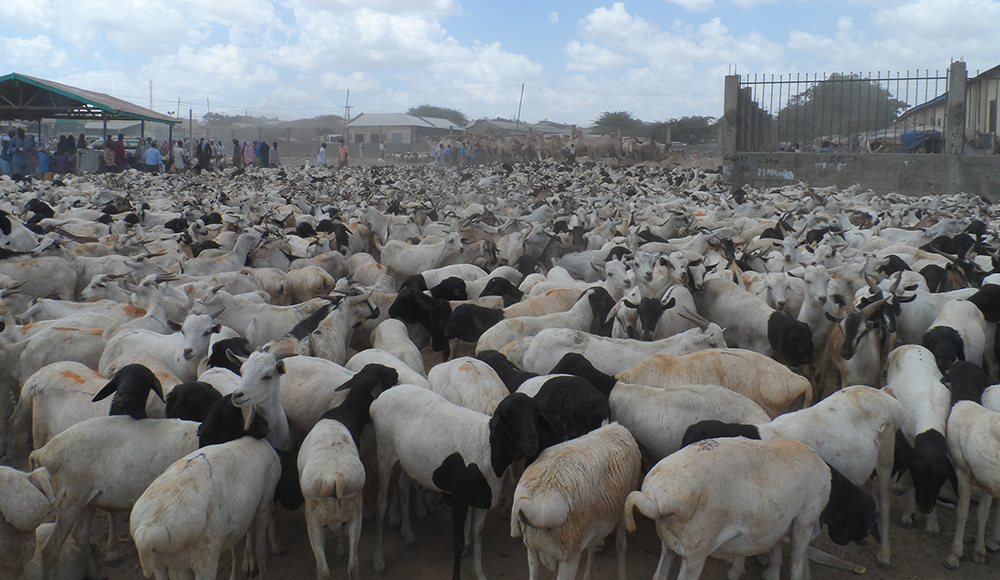
Categories: JSL Laws