Somaliland Central
What you need to know about Somaliland's SovereigntySomaliland Was Only a Country for 5 Days
African Union fact-finding mission declared last year that Somaliland’s status was “unique and self-justified in African political history,” and that “the case should not be linked to the notion of ‘opening a Pandora’s box.’
In June 1960, Somaliland gained its independence from Great Britain and was recognised as a sovereign state by 35 nations, including all five permanent members of the U.N. Security Council. Five days later, the government of Somaliland chose to unite voluntarily with Somalia to create a “Greater Somalia, uniting all the people of ethnic Somali origin.
The union was an unqualified failure. The central government in Mogadishu brutally repressed the people of Somaliland, killing 200,000 of its citizens, displacing another 1.500,000, bombing its cities and laying over 1 million land mines on its territory. In 1991, the people of Somaliland convened a Grand Conference, revoked the Act of Union and declared the independent Republic of Somaliland based on the borders of the former British Protectorate of Somaliland.
Since that time, Somaliland has developed into a strong, dynamic democratic state. A formal constitution was approved in 2001 by 97.7 percent of the population in a national referendum that international observers assessed as free and fair. The constitution provides for the separation of powers and ensures the protection of active opposition political parties, a free and pluralistic media and fundamental human rights and civil freedoms.
The nation has its own president, parliament, passports and currency, security apparatus: military & navy and police. It has fair elections regularly plus free speech and a belief in free markets that is clearly paying off. Somaliland is a conservative Muslim country that is pro-Western, retaining a special affection for Britain, which ruled it for 80 years before granting independence in 1960. People of Somaliland made their own peace, disarmed their militias after the fall of Siad Barre 1991 and created a unique system of government, one that fuses Western-style democracy with African traditions.
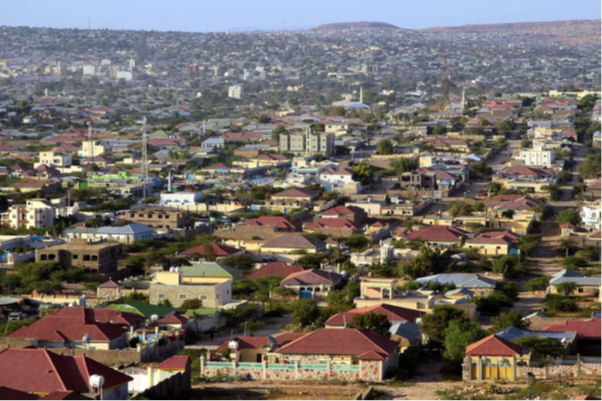
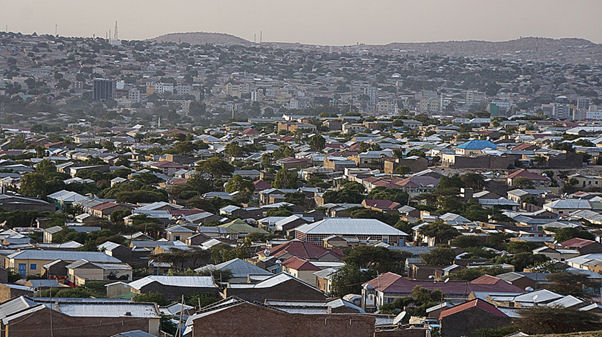
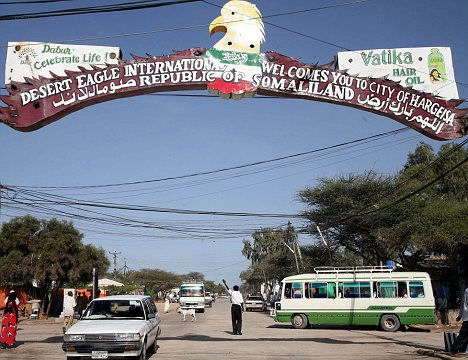
Hargeisa is the vibrating capital of Somaliland with more than 1.5 million people
Somaliland Wants to Make One Thing Clear: It Is NOT Somalia
Republic of Somaliland
Historically and culturally, Somaliland is certainly a separate region from the rest of Somalia before it hastily and voluntarily united with the Italian part of Somalia (Gilbert, 2008). The first formal treaties between the sovereign leaders of the people of Somaliland and the British were signed in the 19th century. Somalilander leaders sought political protection from the British Government as a “quid pro quo for the export of their livestock, which Britain needed at its coaling station in Aden” (Michael, 2004). British Somaliland Protectorate was officially founded in July 1887, after signing so-called “protection treaties” with various Somalilander clans. However, it was briefly independent for five days in 1960 after the British withdrawal, before throwing in its lot with the former Italian south, a decision which its people have regretted ever since. In this brief period, over 34 countries, including Egypt, Israel, and the five Permanent Members of the Security Council, recognized ‘Somaliland’ diplomatically; and interestingly Israel was the first to do so (Charles, 2009). Somaliland contends that it is a legal anomaly whose recognition would set no precedent relevant to the rest of Africa. Somaliland did exist as an independent state in 1960, albeit only for a matter of days, before voluntarily merging with the rest of Somalia. Somaliland currently exists within the old colonial boundaries of British Somaliland (Nasir, 2011). Therefore, it argues that it is simply returning to its previous status as an independent state and that its existence in no way threatens the inviolability of inherited colonial boundaries (Somaliland Ministry of Foreign Affairs, 2002). One of the most commonly articulated concerns about the idea of Somaliland’s independence is that it would set a dangerous precedent by sanctioning a redrawing of the African map. African states and some Western governments have treated the inviolability of Africa’s colonial boundaries as a core principle for the sake of preserving stability. However, pro-independence Somalilanders often rely on moral and historical grounds and believe that this case is exceptional and not secession, but they argue that it emerged from the ashes of a failed union and the bigger project that failed, and as a consequence of that union, it suffered more than it ever did at the hands of Britain (HRW, 2009). Somaliland was among the first African States to be free from colonial rule, and our demand for recognition implies full respect of the borders received at the moment of independence from Great Britain.
The History of Somaliland
From the outset, let me explain that Somaliland was never colonised. Our country became British Somaliland Protectorate in 1884 when our boundaries were defined by Anglo-French, Anglo-Italian and Anglo-Ethiopian Treaties. These are the boundaries where we lived at the time of independence, where we live today and where we have lived for 73 years before independence when we were part of the British Empire. During WW1 and WW2, Somalilanders fought alongside Great Britain and our sons died on foreign battlefields along with the allies.
Our independence was established through a Royal Proclamation by Her Majesty Queen Elizabeth II and took place on the 26th of June, 1960. Our sovereignty, therefore, came about through a legal, majestic and binding Royal Decree while neighbouring Somalia was still under Italian rule at that time. This proves that our independence did not come about through armed conflict; neither is our country ‘self-declared’ or a ‘fantasy’ country like some small island bought by an individual. We are bigger and more populated than 18 African countries.
Somaliland hold seniority over the other 42 African countries
Our existence, as an Independent State has a strong historical basis and continues to be today’s reality. We were the first Somali country to become independent and the 12th independent African nation. We therefore hold seniority over the other 42 African countries who were still under Colonial Rule at our independence but these countries are today in the African Union and are supposedly responsible to determine our fate
Edna Adan Ismail declaration: ”an informal and turbulent partnership that culminated in a brutal ten-year civil war”
The fact that Somaliland was the existing ‘mother country’ to which Somalia united is also overlooked by the International community who grants our former junior partner ‘Somalia’ a de-facto position of ownership and seniority over Somaliland. The fact is, Somalia does not legally own that position nor can Somaliland be considered a ‘break-away state’ because Somalia who we allowed to join us, neither owned or bought Somaliland, nor annexed us through a military conquest
It is also worth mentioning that the Act of Union, which would have formalised the unification of the two Sovereign Somali states, was never ratified by the Parliaments of the two countries.
This makes the 31year union between Somaliland and Somalia, from 1960 to1991, only an informal and turbulent partnership that culminated in a brutal ten-year civil war until we separated in 1991 from a union which was never legally binding on either side.
We all remember the union between Senegal and Gambia which lasted only six months, and that of Egypt and Syria, which lasted three years. Just as we did, these countries went into a voluntary union in good faith as sovereign countries. When their union failed to satisfy the aspirations of their respectful people, they separated without any punishment from the international community. Sadly, Somaliland is being unjustly punished for doing exactly the same as these countries.
Separated from Somalia after war crimes and acts of genocide
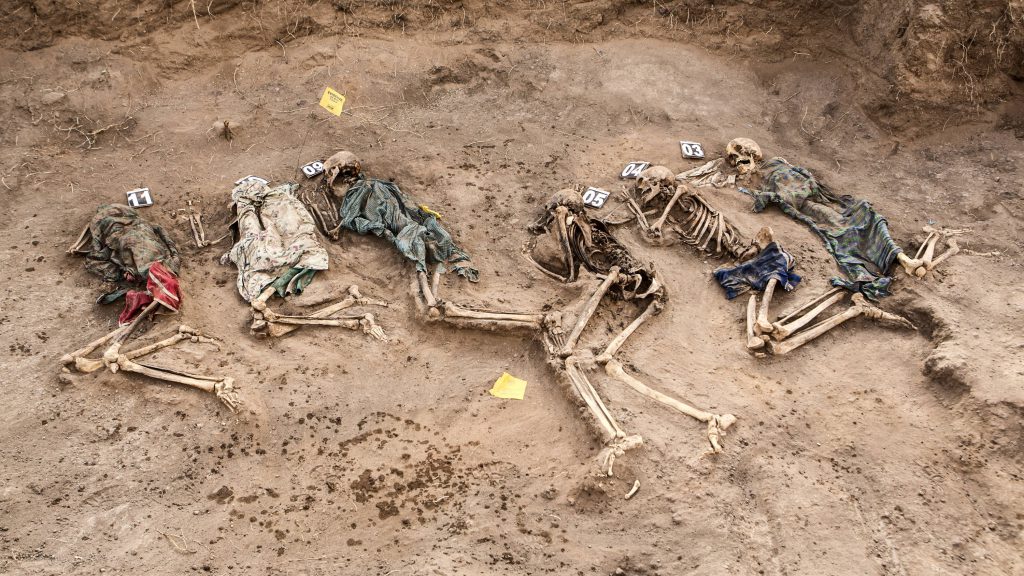
We at least gave our union a much longer trial and only separated from Somalia after the military regime of the Somali dictator Siyad Barre perpetrated war crimes and acts of genocide against our people. We withdrew from that union when Government airplanes indiscriminately bombed our major cities. We withdrew from it when tanks and heavy artillery pounded civilian dwellings without pity. We withdrew when they flattened our schools, hospitals, mosques, and 99% of our cities. During the 10 long years of genocide and mass killings of civilians, the world did absolutely nothing to stop the carnage of our people. Where was Democracy when thousands of women and children became massacred, when over a million became internally displaced and when an additional million sought shelter in camps in Ethiopia, Djibouti and Yemen? To this day, we keep discovering mass graves and so far over a hundred have become registered by UN Forensic Experts. Sadly, the International Community chooses to reward the perpetrators of these war crimes with billions of your taxpayers’ money when Somalilanders who are the victims are being denied a fair hearing and their ‘Day in Court’.